
Kathmandu Valley tours: a complete sightseeing guide
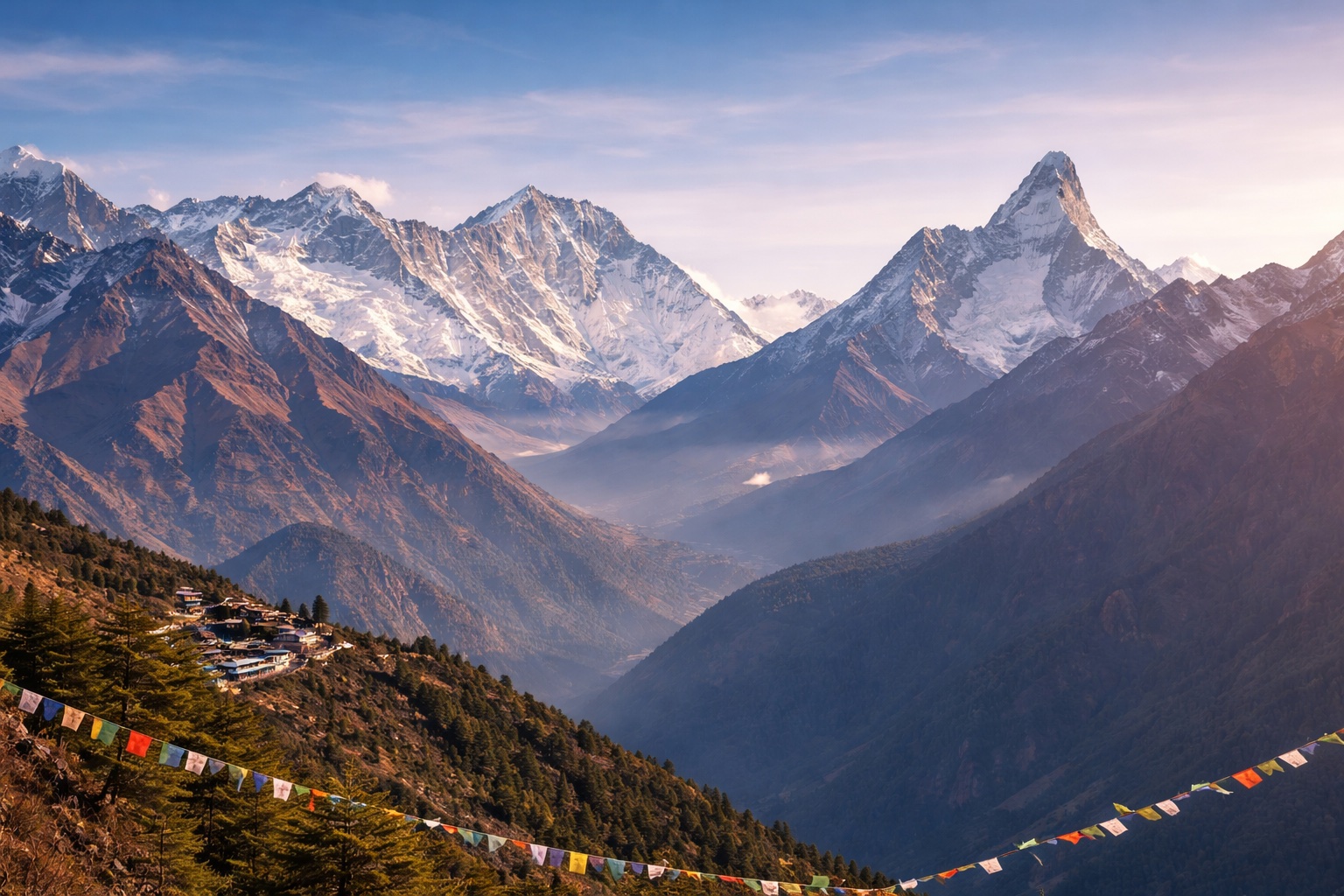
The Kathmandu Valley is a bowl-shaped valley about 25 kilometres across, ringed by forested hills and, on clear days, the snow peaks of the Himalaya. For more than two thousand years it has been the political, cultural and religious centre of Nepal. Its three old royal cities, Kathmandu, Patan and Bhaktapur, plus the great stupas and temples around them, give you seven UNESCO World Heritage monuments in a valley you can cross in an hour.
This guide covers the best places to visit in the Kathmandu Valley, suggested day-tour itineraries, viewpoints and day hikes, cultural experiences, festivals, practical tips and etiquette. It is written by the Himalayan Hiking team, who live and work in Kathmandu and guide visitors around the valley every day.
A short history of the valley
According to legend, the Kathmandu Valley was once a lake, drained when the bodhisattva Manjushri cut a gorge through the hills with his sword. Geologists agree that the valley was indeed a lake in prehistoric times, and its rich soil made it one of the most fertile places in the Himalaya. Early dynasties such as the Licchavis built temples and inscriptions from the 4th century onwards, but it was the Malla kings, from the 12th to the 18th centuries, who created most of the palaces, temples and squares seen today. The valley was divided into rival kingdoms, each competing to build the most beautiful capital.
The craftsmen behind this architecture were the Newar people, the indigenous inhabitants of the valley, whose skills in woodcarving, metal casting, stone sculpture and brick building are still practised today. In 1768–69, Prithvi Narayan Shah of Gorkha conquered the valley and made Kathmandu the capital of a unified Nepal.
The seven UNESCO World Heritage monument zones
In 1979, UNESCO listed the Kathmandu Valley as a World Heritage Site made up of seven monument zones. Together, they form the backbone of any Kathmandu Valley tour.
Kathmandu Durbar Square
Kathmandu Durbar Square, also known as Hanuman Dhoka, was the royal palace complex of the Malla and later Shah kings. Its temples, courtyards and palace buildings include the tall Taleju Temple, the Jagannath Temple with its carved roof struts, and the museum inside the old palace. The Kumari Ghar is home to the Kumari, a young girl chosen from the Newar Shakya community and worshipped as the living incarnation of the goddess Taleju; she sometimes appears at her window to visitors in the courtyard. Kasthamandap, the wooden pavilion that may have given Kathmandu its name, was destroyed in the 2015 earthquake and has since been rebuilt using traditional techniques.
Swayambhunath
Perched on a hill west of the city, Swayambhunath is one of the oldest and holiest Buddhist sites in Nepal. Its white dome is crowned by a golden spire painted with the watchful eyes of the Buddha, and prayer flags stream down from its summit. Visitors climb 365 stone steps to the top, passing monkeys that give the site its popular name, the Monkey Temple. The view over the valley at sunset is superb.
Boudhanath
Boudhanath is one of the largest stupas in the world and the heart of Tibetan Buddhist culture in Nepal. Surrounded by monasteries, it is a place of constant devotion: pilgrims, monks and local residents walk clockwise around the stupa, spinning prayer wheels and chanting. The best time to visit is early morning or late afternoon, when the circuit, known as the kora, is busiest. Rooftop cafés around the square offer views of the dome and the evening rituals.
Pashupatinath
Pashupatinath is the most important Hindu temple in Nepal, dedicated to Lord Shiva as Pashupati, lord of animals. It stands on the banks of the sacred Bagmati River, whose ghats are used for open-air cremations. Non-Hindus cannot enter the main temple, but can explore the surrounding shrines, watch rituals from across the river and meet the colourful sadhus who live and pray here. The evening aarti ceremony, with lamps, music and chanting, is a moving experience. Visitors should be respectful, dress modestly and avoid photographing grieving families.
Patan Durbar Square
Patan, also called Lalitpur, the "city of beauty", lies just south of Kathmandu across the Bagmati. Its Durbar Square is often considered the finest in the valley, with the stone Krishna Mandir, the royal palace, and the outstanding Patan Museum, one of the best museums of sacred art in South Asia. Nearby, the Golden Temple (Hiranya Varna Mahavihar) and the Mahabouddha temple of a thousand Buddhas are highlights, and metalworkers in the surrounding lanes still cast bronze statues using traditional lost-wax methods.
Bhaktapur Durbar Square
Bhaktapur, about 13 kilometres east of Kathmandu, is the best-preserved of the three royal cities. Much of the old town is closed to traffic, and its brick lanes lead through squares filled with temples, courtyards and workshops. Highlights include the five-tiered Nyatapola Temple, the tallest temple in Nepal; the 55-Window Palace and its Golden Gate; Taumadhi Square; Dattatreya Square with its woodcarving museum and peacock window; and Pottery Square, where potters shape clay on wheels. Try juju dhau, Bhaktapur's famous "king of yoghurts".
Changu Narayan
Changu Narayan, on a ridge north of Bhaktapur, is considered the oldest temple in the Kathmandu Valley. It has a 5th-century stone inscription, one of the oldest in Nepal, and fine stone, wood and metal sculptures of Vishnu. The quiet village and the views over the valley make it a good stop, and you can walk there from Nagarkot.
Suggested Kathmandu Valley day tours
Day 1: Kathmandu highlights
Start at Swayambhunath in the morning, then explore Kathmandu Durbar Square and the old market streets of Indra Chowk and Asan. After lunch, visit Pashupatinath and end the day at Boudhanath, joining the evening kora around the stupa.
Day 2: Patan and Bhaktapur
Spend the morning in Patan, visiting Durbar Square, the Patan Museum and the Golden Temple. In the afternoon, drive to Bhaktapur to explore its squares, temples and pottery workshops, and stay for sunset or continue to Nagarkot for the night.
Day 3: Nagarkot sunrise and Changu Narayan
Watch sunrise over the Himalaya from Nagarkot, then walk or drive to Changu Narayan. In the afternoon, visit the Newar villages of Bungamati and Khokana, or take the Chandragiri cable car for views over the valley.
These itineraries can be combined, shortened or extended. A one-day tour can cover the main Kathmandu highlights; two days allow Patan and Bhaktapur; three or four days let you enjoy the valley at a relaxed pace with viewpoints and villages.
Viewpoints and day hikes
- Nagarkot: the most famous viewpoint on the valley rim, with sunrise views from Langtang towards the Everest area on clear mornings.
- Chandragiri Hills: a cable car climbs to around 2,500 m, with panoramic views of the Himalaya and the valley and a temple at the top.
- Dhulikhel and Namobuddha: a traditional Newar town with mountain views and a walk to the Buddhist monastery of Namobuddha.
- Shivapuri Nagarjun National Park: forested hills north of the city with hiking trails to Shivapuri Peak, monasteries and viewpoints.
- Champadevi and Jamacho: hilltop hikes on the southern and northern rims of the valley.
Cultural experiences in Kathmandu
Beyond sightseeing, the valley offers many ways to experience local culture:
- Cooking class: learn to make momos, dal bhat and Newari dishes with a local family.
- Thangka painting and crafts: visit workshops in Bhaktapur, Patan and Boudhanath to see artists painting thangkas and metalworkers casting statues.
- Meditation and yoga: join a class or retreat at a monastery or centre in the valley.
- Heritage walks: explore the hidden courtyards, shrines and bahals (monastery courtyards) of old Kathmandu with a local guide.
- Village visits: discover traditional life in Bungamati, Khokana and Kirtipur, where Newar customs remain strong.
- Everest mountain flight: an early-morning flight from Kathmandu along the Himalaya to see Everest without trekking.
Festivals in the Kathmandu Valley
The valley's calendar is packed with festivals, many of them Newar and found nowhere else. Indra Jatra, in September, brings masked dances and the chariot procession of the Kumari to Kathmandu Durbar Square. Dashain and Tihar, in autumn, are the biggest national festivals. Bisket Jatra, the Nepali New Year festival in April, sees huge chariots pulled through Bhaktapur. Rato Machhindranath Jatra, Patan's long chariot festival, takes place in spring, and Maha Shivaratri brings thousands of pilgrims and sadhus to Pashupatinath. Dates follow the lunar calendar and change each year.
Food in the Kathmandu Valley
The Kathmandu Valley is the best place in Nepal to explore food. Try Newari specialities such as bara (lentil pancakes), chatamari (rice-flour crêpes), choila (spiced grilled meat), kachila and the festive samay baji platter. Momos are everywhere, and Tibetan restaurants around Boudhanath serve thukpa noodle soup and thenthuk. In Thamel and Jhamsikhel, international restaurants and cafés serve everything from wood-fired pizza to specialty coffee from Nepal's own hill farms.
Best time to visit the Kathmandu Valley
Kathmandu can be visited all year round. October and November offer clear skies, pleasant temperatures and major festivals. December to February is cool and often clear, with chilly mornings and evenings. March and April are warm and pleasant, although haze can reduce mountain views. During the June–September monsoon, rain usually falls in heavy showers, often in the afternoon or at night, and sightseeing continues with fewer visitors.
Practical tips
- Entrance fees: most heritage sites charge fees for foreign visitors, which fund conservation and post-earthquake restoration. Keep your tickets, as some are checked more than once.
- Traffic: the valley's roads are busy, so allow extra time between sites. Starting early helps.
- Guides: a licensed local guide adds enormously to your understanding of the temples, legends and rituals.
- Air quality: dust and pollution can be high in the dry season; a mask is useful on busy roads.
- Money: ATMs are widely available, and most hotels and larger shops accept cards.
Etiquette at temples and stupas
Dress modestly, covering shoulders and knees. Remove your shoes before entering temples and some shrines, and remove leather items where requested. Walk clockwise around stupas, chortens and prayer wheels. Ask permission before photographing people, especially at religious ceremonies and at the cremation ghats of Pashupatinath. Do not touch offerings or sacred objects, and note that some Hindu temples are open only to Hindus.
Where to stay in Kathmandu
Kathmandu has accommodation for every taste. Thamel is the lively travellers' district, full of shops, restaurants and trekking agencies. Boudhanath is calmer, and you stay right beside the great stupa. Patan has boutique hotels in restored Newar houses, and Bhaktapur offers guesthouses overlooking its squares. International hotels are found around Durbar Marg and the city centre.
The 2015 earthquake and the valley's restoration
On 25 April 2015, a powerful earthquake struck central Nepal, damaging or destroying many historic buildings in the Kathmandu Valley. Temples in Kathmandu, Patan and Bhaktapur Durbar Squares collapsed, and the famous Kasthamandap pavilion and Dharahara tower fell. In the years since, Nepali craftsmen, conservation experts and international partners have worked to rebuild the monuments using traditional materials and techniques, while strengthening them against future earthquakes. Many temples have now been restored, and visiting the valley today is a chance to see living heritage being rebuilt by the same craft traditions that created it.
Thamel and shopping
Thamel is Kathmandu's busy travellers' district, a maze of narrow streets packed with guesthouses, restaurants, trekking shops, bookshops and handicraft stores. It is the best place to buy or rent trekking gear and to find souvenirs such as pashmina shawls, singing bowls, thangka paintings, prayer flags, felt crafts and Nepali tea. For more authentic shopping, explore the old market streets of Asan and Indra Chowk, the metal workshops of Patan, the pottery of Bhaktapur and the Tibetan craft shops around Boudhanath. Fair-trade shops in Kathmandu and Patan support women's cooperatives and artisans across Nepal.
Kirtipur, Bungamati and Khokana
To see everyday Newar life away from the main sights, visit the hilltop town of Kirtipur, with its old temples, narrow lanes and views over the valley, or the villages of Bungamati and Khokana south of Patan. Bungamati is known for its woodcarvers and as the home of the rain god Rato Machhindranath, while Khokana is famous for its traditional mustard oil presses. Both villages were damaged in the 2015 earthquake and are being rebuilt, and the walk between them, through fields and past small shrines, makes a good half day.
Getting around the Kathmandu Valley
Traffic in the valley is heavy, and distances between sites can take longer than expected. On a guided tour, a private vehicle with a driver is the most comfortable and efficient option. Taxis and ride-hailing apps are widely available for independent trips, and walking is the best way to explore the old city centres of Kathmandu, Patan and Bhaktapur. Cycling tours on the quieter roads around the valley rim are another enjoyable option.
Kathmandu with children
Children enjoy the monkeys at Swayambhunath, the pigeons and street life of the Durbar Squares, the pottery wheels of Bhaktapur, the Garden of Dreams in Thamel, the cable car ride at Chandragiri and cooking classes where they can shape their own momos. Plan shorter days with rest breaks, carry snacks and water, and use a private vehicle to avoid long waits in traffic.
Evenings in Kathmandu
Kathmandu has a relaxed evening scene. Watch the sunset from a rooftop café at Boudhanath or Swayambhunath, attend the evening aarti at Pashupatinath, enjoy a traditional Nepali dinner with cultural dance performances, or explore Thamel's live music bars and restaurants. Patan's Jhamsikhel area has cafés and restaurants popular with locals and expatriates.
One day in Kathmandu before your trek
Most trekking itineraries include a free day in Kathmandu before departure. It is the perfect opportunity for a half-day or full-day guided tour of the highlights: Swayambhunath and Kathmandu Durbar Square in the morning, followed by Pashupatinath and Boudhanath in the afternoon. The tour also leaves time for your trek briefing, equipment check and last-minute shopping in Thamel.
Hidden corners of old Kathmandu
Some of Kathmandu's best corners are hidden in plain sight. Step through a low doorway off a busy street and you may find yourself in a quiet bahal, a courtyard monastery surrounded by old Newar houses, with a small stupa, prayer wheels and children playing. Kathesimbhu Stupa, a miniature version of Swayambhunath near Thamel, Itum Bahal, one of the largest courtyards in the old city, and the carved temples of Seto Machhindranath and Annapurna Temple on the way to Asan are all worth seeking out. A walking tour with a local guide reveals the stories of these hidden places and the festivals that bring them to life.
Patan in more depth
Patan rewards a slow visit. Beyond Durbar Square, the city is full of Buddhist courtyards, water spouts (hiti) that still provide water to residents, and workshops where artisans cast bronze statues, carve wood and make jewellery. The Patan Museum, housed in part of the old palace, displays Hindu and Buddhist sculpture with clear explanations, making it an excellent introduction to the art and religion of the valley. There's a café in the palace's back garden if you need a break. Kumbheshwar Temple, one of only two five-roofed temples in the valley, and the ponds of Pimbahal are also worth a visit.
Bhaktapur in more depth
Many visitors wish they had spent the night in Bhaktapur. Once the day visitors leave, the squares become peaceful, and in the early morning local people gather at temples and water spouts for daily worship. Stay in a guesthouse overlooking Taumadhi Square or Durbar Square, explore the quieter eastern part of the city around Dattatreya Square, and watch craftsmen carving wood, painting thangkas and firing pottery. The city's museums, in the old palace and the Pujari Math, display exquisite woodcarvings and sculptures.
Kathmandu Valley tour in two days: a sample plan
| Day | Morning | Afternoon |
|---|---|---|
| 1 | Swayambhunath and Kathmandu Durbar Square | Pashupatinath and Boudhanath at sunset |
| 2 | Patan Durbar Square, Patan Museum and Golden Temple | Bhaktapur, overnight in Nagarkot for sunrise |
Where to eat in the Kathmandu Valley
The valley's food scene is one of the pleasures of a visit. In the old city, small Newari eateries serve bara, chatamari and spiced buffalo dishes, and street stalls sell hot momos and sel roti, a ring-shaped rice bread. Rooftop restaurants around Durbar Square, Patan and Bhaktapur combine good food with views over the temples. Boudhanath's Tibetan restaurants serve steaming bowls of thukpa, while Thamel and Jhamsikhel offer international cuisine, bakeries and cafés serving coffee grown in Nepal's hill districts. A food walk with a local guide is a delicious way to explore the city's culinary traditions and learn about the festivals behind many dishes.
However long you stay, the Kathmandu Valley rewards curiosity. Every lane, courtyard and temple has a story, and festivals seem to appear around every corner. With a knowledgeable guide and time to wander, even a short stay reveals why this valley has fascinated travellers, pilgrims and scholars for centuries. Many visitors arrive planning a single day of sightseeing before their trek and leave wishing they had allowed a week, so we always recommend building in a little extra time to explore at your own pace.
Book your Kathmandu Valley tour with Himalayan Hiking
We're a travel company based in Kathmandu. We organise private Kathmandu day tours, multi-day Kathmandu Valley tours, sunrise trips to Nagarkot, village walks, cooking classes and mountain flights, with private vehicles and licensed English-speaking guides. Tours can be added before or after any trek. Browse our tours above, or contact us with your dates and interests for a tailor-made itinerary.