
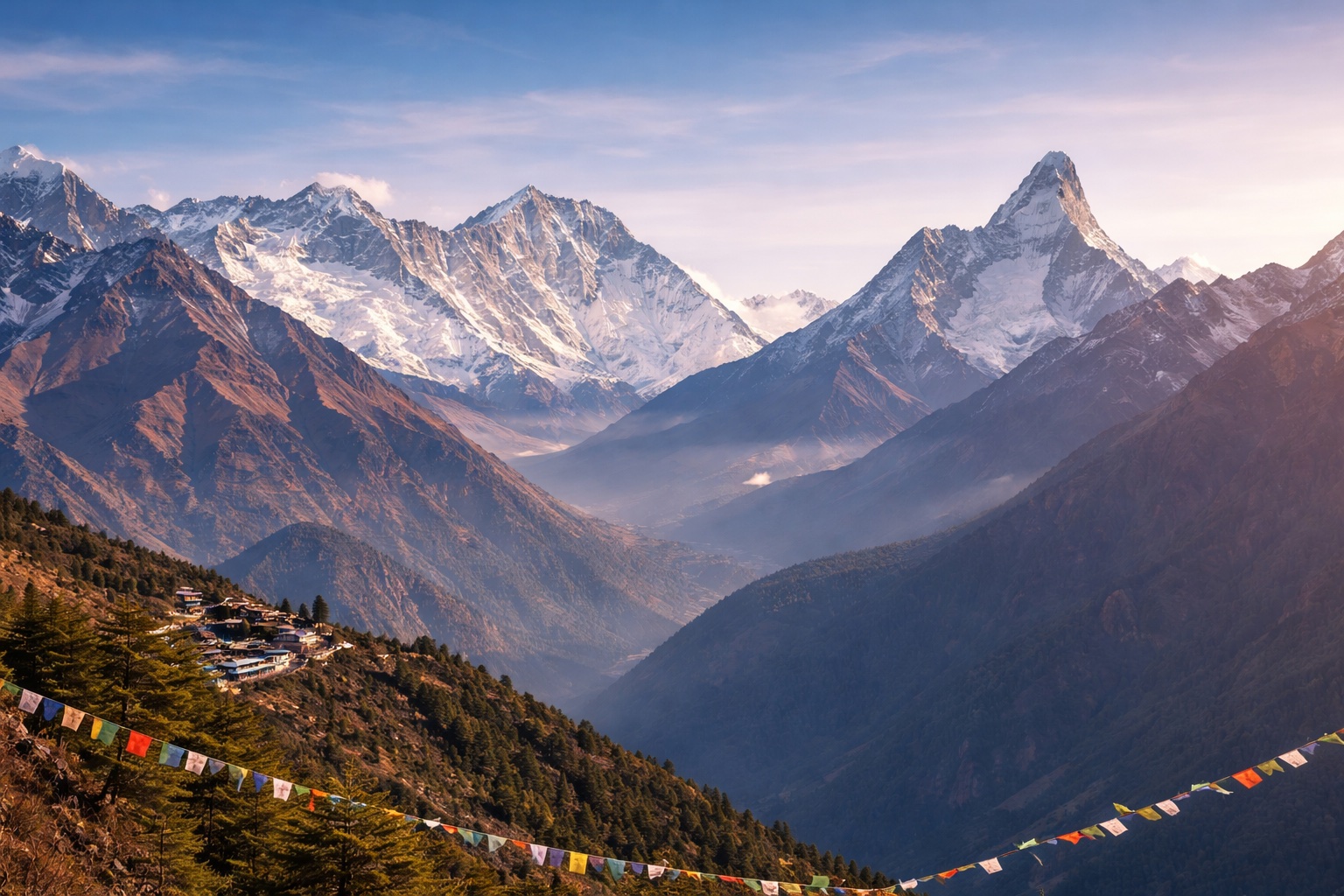
Short treks in Nepal: the complete guide to 2–7 day Himalayan treks
Many people imagine that trekking in Nepal means weeks of hard walking at high altitude. In fact, some of the country's most beautiful walks take less than a week. Short treks in Nepal lead through terraced hillsides, rhododendron forests and traditional villages to viewpoints with sweeping panoramas of the Himalaya, and they can easily fit into a holiday that also includes Kathmandu, Pokhara or a jungle safari.
This guide explains how to choose the right short trek for your time and fitness, describes the best routes near Pokhara, Kathmandu and in the Everest and Langtang regions, and covers seasons, difficulty, permits, family trekking and what to pack. Our team in Kathmandu wrote it, drawing on what our guides see on the trails.
Who are short treks for?
Short treks suit a wide range of travellers:
- First-time trekkers who want to try Himalayan trekking before committing to a longer route.
- Families with children, as daily distances are manageable and altitudes are moderate.
- Travellers short on time, such as business travellers or those on a combined India–Nepal trip.
- Older walkers who prefer shorter days and lower altitudes.
- Tour travellers who want to add a few days of walking to a cultural itinerary.
- Winter visitors, since most short treks stay low enough to be enjoyable from December to February.
Short doesn't mean second-best. On routes such as Ghorepani Poon Hill or Mardi Himal, you see the same peaks that longer treks visit, often from even better viewpoints.
The best short treks near Pokhara
Ghorepani Poon Hill trek (4–5 days)
The Ghorepani Poon Hill trek is the most popular short trek in Nepal. From the trailhead near Nayapul or Ulleri, a stone staircase climbs through Magar villages and forests of rhododendron and oak to Ghorepani (2,860 m). Before dawn, you walk up to Poon Hill (3,210 m) to watch the sunrise light up Dhaulagiri, Annapurna South, Hiunchuli, Machhapuchhre and a long chain of peaks. The route usually continues via Tadapani to the Gurung village of Ghandruk, with its stone houses and museum, before returning to Pokhara. In spring, the rhododendron forests around Ghorepani are among the most beautiful in Nepal.
Ghandruk trek (2–3 days)
For the shortest taste of trekking, the Ghandruk trek visits one of the largest Gurung villages in Nepal, with close views of Annapurna South and Machhapuchhre. Roads now reach nearby, so the walk can be as short as a single night, which suits families and anyone with very little time.
Mardi Himal trek (5–7 days)
The Mardi Himal trek climbs a forested ridge east of the Annapurna Sanctuary and emerges above the tree line with close-up views of Machhapuchhre and Mardi Himal. From High Camp (about 3,580 m), an early-morning hike leads to a viewpoint at around 4,200 m or on towards the base camp area at about 4,500 m. It's quieter than Poon Hill and gets you closer to the big peaks in a similar time, but it goes higher.
Australian Camp and Dhampus (2–3 days)
The easy walk to Australian Camp and the village of Dhampus is one of the gentlest treks in Nepal, with wide views of the Annapurna range and Machhapuchhre. It's a good choice for young children, or anyone who wants a relaxed overnight hike from Pokhara.
Panchase trek (3–4 days)
The Panchase trek explores forested hills west of Phewa Lake, visiting quiet villages and the sacred Panchase lakes. It has fine views of the Annapurnas and Dhaulagiri and sees far fewer trekkers than the main routes, making it a good choice for birdwatchers and those seeking peace.
Khopra Danda trek (6–7 days)
The Khopra Danda trek combines part of the Poon Hill route with a quiet ridge at about 3,660 m, where community lodges look straight across to Dhaulagiri, Annapurna South and the deep Kali Gandaki gorge. Fit trekkers can make a side trip to the sacred Khayer Lake.
Short treks near Kathmandu
Chisapani–Nagarkot trek (2–3 days)
The Chisapani–Nagarkot trek starts at Sundarijal on the edge of the Kathmandu Valley and climbs through Shivapuri Nagarjun National Park to the hill village of Chisapani, with views stretching from Langtang to the Everest area on clear days. It continues along ridges and through villages to Nagarkot, famous for its sunrise over the Himalaya, and can end with a walk down to the ancient temple of Changu Narayan. It suits travellers with only a few days in Kathmandu.
Helambu trek (5–7 days)
The Helambu trek leads north from Kathmandu into the hills of the Hyolmo people, with Buddhist monasteries, apple orchards and views of the Langtang and Jugal ranges. It stays mostly below 3,600 m and is an excellent winter trek.
Kathmandu Valley rim hikes (1 day)
Day hikes to Shivapuri Peak, Champadevi, Namobuddha or Chandragiri are a great way to stretch your legs and enjoy mountain views without overnight stays. They're also a good way to acclimatise and test your fitness before a longer trek.
Short treks in the Everest and Langtang regions
Everest View trek (7–9 days)
If you dream of seeing Everest but have limited time, the Everest View trek is the answer. After a scenic flight to Lukla, you walk through Sherpa villages to Namche Bazaar (3,440 m) and climb to viewpoints above the town and at Khumjung or Tengboche Monastery, with views of Everest, Lhotse, Ama Dablam and Thamserku. The trek stays below about 3,900 m, but Lukla flights can be delayed by weather, so a spare day is recommended.
Langtang Valley trek (7–8 days)
The Langtang Valley trek is the shortest way to walk among glaciers and 7,000-metre peaks. From Syabrubesi, a day's drive from Kathmandu, the trail follows the Langtang river to Kyanjin Gompa (3,870 m), with optional climbs to Kyanjin Ri for panoramic views. It needs no flights and suits trekkers with a week to spare.
Tamang Heritage Trail (5–7 days)
The Tamang Heritage Trail, west of Syabrubesi, visits traditional Tamang villages with community homestays, natural hot springs at Tatopani and views of Langtang and Ganesh Himal. It is a cultural trek with moderate altitude.
Comparing short treks in Nepal
| Trek | Days | Highest point | Start from | Best for |
|---|---|---|---|---|
| Chisapani–Nagarkot | 2–3 | About 2,200 m | Kathmandu | Very short trips |
| Australian Camp–Dhampus | 2–3 | About 2,060 m | Pokhara | Young children |
| Ghandruk | 2–3 | About 2,000 m | Pokhara | Gurung culture |
| Panchase | 3–4 | About 2,500 m | Pokhara | Quiet trails, birds |
| Ghorepani Poon Hill | 4–5 | 3,210 m | Pokhara | Classic sunrise view |
| Mardi Himal | 5–7 | About 4,500 m | Pokhara | Close mountain views |
| Helambu | 5–7 | About 3,600 m | Kathmandu | Winter trekking |
| Langtang Valley | 7–8 | 3,870 m | Kathmandu | Glaciers, no flights |
| Everest View | 7–9 | About 3,900 m | Kathmandu (flight) | Seeing Everest |
How to choose the right short trek
Start with how many days you have. With two or three days, choose Chisapani–Nagarkot from Kathmandu or Australian Camp, Dhampus or Ghandruk from Pokhara. With four or five days, the Ghorepani Poon Hill trek is hard to beat. With six or seven days, consider Mardi Himal, Khopra Danda or Helambu, and with a full week or a little more, the Langtang Valley or the Everest View trek.
Next, think about what you most want to see. For sunrise panoramas, choose Poon Hill, Nagarkot or Khopra. For close-up high mountains, choose Mardi Himal, Langtang or Everest View. For culture and village life, choose Ghandruk, the Tamang Heritage Trail or Helambu. For quiet trails, choose Panchase, Khopra or Helambu.
Finally, consider the season. In winter, lower routes such as Poon Hill, Ghandruk, Panchase, Chisapani–Nagarkot and Helambu are ideal. In the monsoon, be ready for rain, or consider shorter walks with flexible plans.
A typical short trek: Ghorepani Poon Hill in five days
| Day | Route | Overnight altitude |
|---|---|---|
| 1 | Drive Pokhara to Nayapul or Ulleri, trek to Tikhedhunga or Ulleri | 1,500–2,000 m |
| 2 | Climb through rhododendron forest to Ghorepani | 2,860 m |
| 3 | Sunrise at Poon Hill, trek along the ridge to Tadapani | 2,630 m |
| 4 | Tadapani to Ghandruk, visit the Gurung museum | 1,940 m |
| 5 | Walk to the road and drive back to Pokhara | — |
The same route can be shortened to four days or extended to include Mohare Danda, Khopra Danda or a hot spring stop at Jhinu Danda.
Best time for short treks
- Autumn (late September–November): the clearest views and pleasant temperatures; the busiest season.
- Winter (December–February): clear, crisp days and quiet trails on lower routes; cold nights, so bring warm layers.
- Spring (March–May): rhododendrons in bloom, especially around Ghorepani in March and April; warmer days with more afternoon haze.
- Monsoon (June–early September): rain, cloud and leeches in the forests, but very green hills and very few trekkers.
Difficulty and fitness
Most short treks are graded easy to moderate. Typical walking days last four to six hours, with rest stops for tea and lunch. The main challenge on routes near Pokhara is the stone staircases, which can be tiring on the legs, especially on descents. Mardi Himal and the Everest View trek reach higher altitudes, so walking slowly and drinking plenty of water is important.
To prepare, take regular walks of two to four hours on hilly ground in the weeks before your trip, and include some stair climbing. If you are active and in good health, you will enjoy a short trek without special training.
Short treks with children
Trekking can be a great family trip. Children enjoy meeting local kids in the villages, watching mule trains and buffalo on the trail and eating momos in teahouse dining rooms. Choose a short route with easy days, such as Australian Camp, Ghandruk, Poon Hill or Chisapani–Nagarkot, and plan shorter walking days with plenty of breaks. Porters carry the main luggage, and we can arrange an extra porter to carry young children on difficult sections if needed. Pack snacks, sun protection and warm layers, and be flexible so the trek remains fun for everyone.
Permits for short treks
Treks near Pokhara, including Poon Hill, Ghandruk, Mardi Himal, Australian Camp and Khopra, require an Annapurna Conservation Area Permit (ACAP). The Everest View trek requires the Sagarmatha National Park and Khumbu Pasang Lhamu Rural Municipality permits, and Langtang treks require the Langtang National Park permit. The Chisapani–Nagarkot and Helambu routes pass through Shivapuri Nagarjun National Park. Nepal's rules require most foreign trekkers in national parks and conservation areas to walk with a licensed guide. We arrange all permits as part of your trek.
Accommodation and food
All the short treks in this guide are teahouse treks. Lodges on the popular routes near Pokhara are comfortable, often with private bathrooms and hot showers in the lower villages. Menus include dal bhat, momos, noodles, pasta, soups and pancakes, and many lodges bake their own bread and apple pie. On quieter routes such as Panchase, Khopra and the Tamang Heritage Trail, accommodation is simpler, and in community lodges or homestays you live alongside the family.
What to pack for a short trek
- Comfortable, broken-in walking boots or trail shoes with good grip.
- Layers: a base layer, a fleece and a warm jacket for early mornings at viewpoints.
- A light waterproof jacket.
- A daypack with water bottle, snacks, sunscreen, sunglasses and a hat.
- A head torch for sunrise hikes.
- Trekking poles for stone steps and descents.
- A sleeping bag or liner in winter (blankets are provided in lodges).
You can leave your main luggage at your hotel in Kathmandu or Pokhara and trek with a small bag carried by a porter.
Combining a short trek with a Nepal tour
Short treks fit perfectly into a wider Nepal holiday. A popular ten-day trip combines two days of sightseeing in the Kathmandu Valley with the Ghorepani Poon Hill trek from Pokhara, a day of relaxing by Phewa Lake and two nights of jungle safari in Chitwan. Travellers with less time can add the Chisapani–Nagarkot trek to a Kathmandu stay, while those with more time can combine the Everest View trek with a tour of Pokhara and Lumbini. We plan transport, hotels, permits and guides as one itinerary.
Pikey Peak: a short trek with Everest views
The Pikey Peak trek in the lower Solukhumbu region is a short trek that few people have heard of. Reached by road from Kathmandu, it climbs through Sherpa villages, rhododendron forest and yak pastures to Pikey Peak (about 4,065 m), a hilltop sacred to local Sherpas, with a panoramic view of the Himalaya stretching from Kanchenjunga to Annapurna and including Everest. The trek takes about five to seven days and sees very few other trekkers, making it an excellent alternative to the Everest View trek without the Lukla flight.
Short treks for older walkers
Short treks are a good way for older travellers to see the Himalaya. Routes such as Australian Camp, Ghandruk, Poon Hill, Panchase and Chisapani–Nagarkot stay at moderate altitudes and can be walked at a gentle pace with shorter days. We can plan extra nights so that no day is too long, arrange vehicles to shorten the approach, and choose lodges with private bathrooms where available. A porter carries the luggage, and your guide will set a comfortable pace and handle all the logistics.
Sunrise photography tips
Many short treks are built around a sunrise viewpoint. For the best photographs, start early to arrive before first light, bring a head torch and warm layers for the wait, and carry spare batteries in an inside pocket, as the cold drains them quickly. Use the soft light before sunrise for wide landscapes, then switch to a longer focal length as the sun hits the summits. After sunrise, turn around: the light on the forests, villages and fellow trekkers is often just as beautiful as the peaks.
Altitude and safety on short treks
Most short treks stay below the altitudes where acute mountain sickness is common, but Mardi Himal, Pikey Peak, Everest View and Langtang Valley reach 3,500–4,500 m, where some people feel the effects. Walk slowly, drink plenty of water and tell your guide if you have a headache, nausea or dizziness. Weather can change quickly in the mountains, especially in spring and the monsoon, so pack a waterproof layer on every trek. Travel insurance covering trekking to the maximum altitude of your route is essential.
Extending a short trek
Most short treks can be extended if you have extra time. Poon Hill combines naturally with Khopra Danda or Annapurna Base Camp, Mardi Himal can be linked to the Annapurna Base Camp trail, Chisapani–Nagarkot can be extended into Helambu, and the Langtang Valley can continue to the Gosainkunda lakes. Tell us how many days you have, and we will suggest the best combination.
What does a short trek cost?
Short treks are one of the most affordable ways to experience the Himalaya. The price depends on the route, number of days, group size, transport and whether meals are included. Most packages include transport to and from the trailhead, permits, teahouse accommodation, a licensed guide and porters. Budget separately for drinks and snacks, hot showers and charging, and tips for your guide and porters. The Everest View trek costs more because it includes flights to Lukla.
Logistics: luggage, transport and timing
On a short trek, you can leave most of your luggage at your hotel in Kathmandu or Pokhara and take only what you need in a small duffel bag carried by a porter. Treks from Pokhara usually begin with a drive of one to three hours to the trailhead, so you can start walking on the day you leave town. For treks near Kathmandu, trailheads are within an hour or two of the city. We arrange all transfers, and our team in Kathmandu stays in touch with your guide throughout the trek.
Short treks in the monsoon
If you visit Nepal between June and early September, a short trek is still possible with the right expectations. Rain usually falls in heavy showers, often in the afternoon or at night, and mornings can be clear. Forests are green, waterfalls are at their fullest, and trails are almost empty. Leeches are common on forest trails, so wear long trousers, leech socks and insect repellent. Routes near Kathmandu and Pokhara are the easiest to adapt, and short walks in the rain-shadow areas of Lower Mustang, around Jomsom and Muktinath, stay much drier.
Short treks and cultural experiences
Many short treks pass through villages with strong cultural traditions. In Ghandruk, the Gurung Museum displays traditional tools, clothing and household objects, and villagers sometimes perform cultural dances for visitors. On the Tamang Heritage Trail, community homestays offer songs, dances and home-cooked meals. Around Nagarkot and Changu Narayan, the trail passes Newar and Tamang villages where daily life follows the rhythm of the fields.
Travel insurance for short treks
Even on a short trek, travel insurance is important. Make sure your policy covers trekking to the maximum altitude of your route, medical treatment and helicopter evacuation, as well as trip delays that may affect flights such as Lukla or Jomsom.
A short trek is often the start of a lifelong love of the Himalaya. Many of our trekkers begin with Poon Hill or Nagarkot and return a few years later for Everest Base Camp, the Annapurna Circuit or even a climbing peak, with the confidence and experience gained on their first short walk in the mountains.
Book your short trek with Himalayan Hiking
Himalayan Hiking is based in Kathmandu. We organise short treks near Pokhara, Kathmandu and in the Everest and Langtang regions, with licensed guides, porters, permits, transport and lodges arranged. Every short trek can run privately on your own dates, and we will adapt the pace and route for families, beginners and older walkers.
Browse our short treks above, or contact us with your dates and we will recommend the best route for you.