
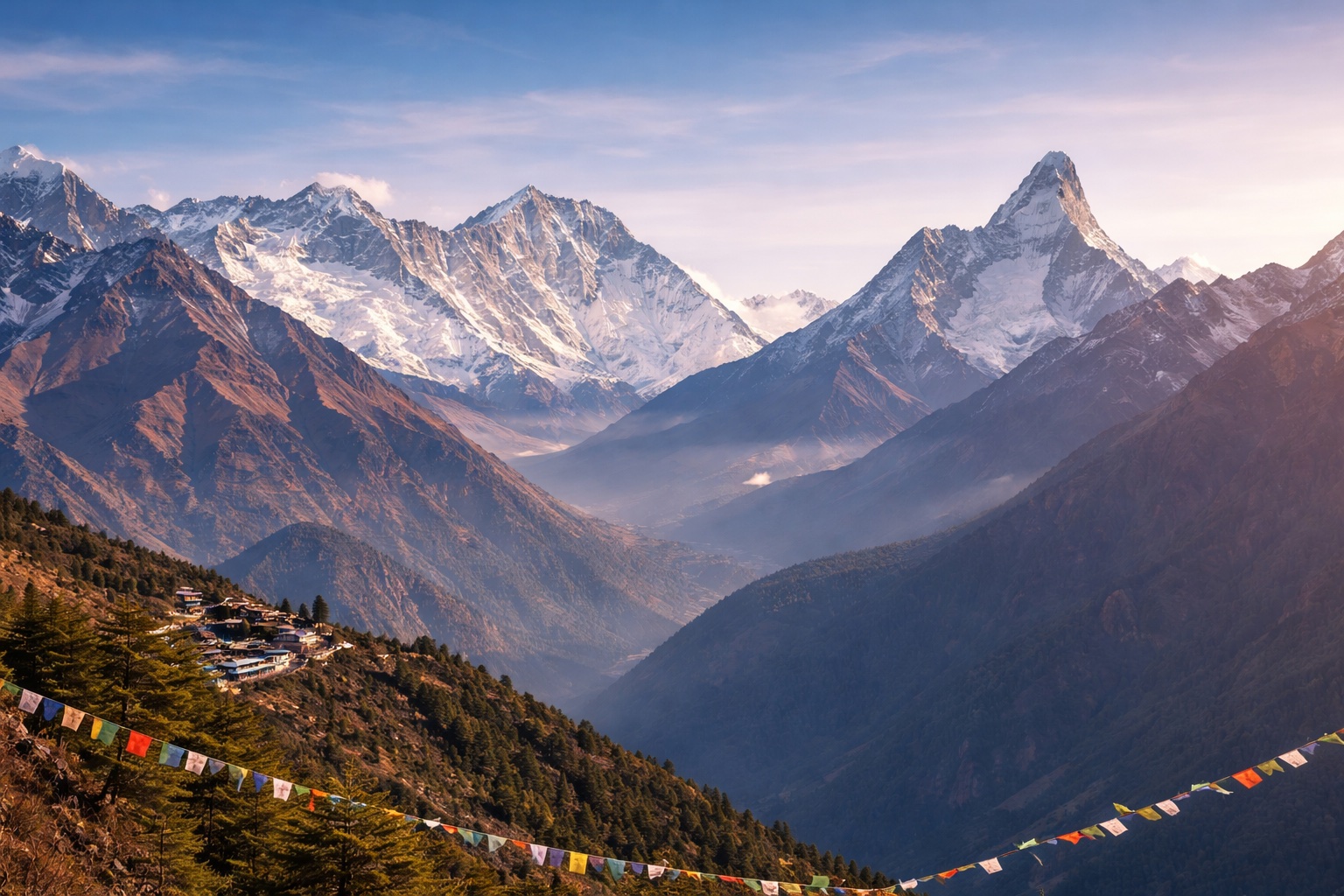
Ghorepani Poon Hill Trek
The Ghorepani Poon Hill trek is a 7-day guided trek from Kathmandu and the most popular short trek in Nepal. From Pokhara, you climb stone staircases through Magar and Gurung villages and rhododendron forest to Ghorepani (2,860 m), then hike before dawn to Poon Hill (3,210 m) for a famous sunrise over Dhaulagiri (8,167 m), Annapurna South, Machhapuchhre and a long chain of Himalayan peaks.
The trek is easy to moderate, stays at modest altitude and can be walked almost all year, so it suits beginners, families and anyone short on time. It continues via Tadapani to the Gurung village of Ghandruk. A licensed guide, porters, the ACAP permit, transport, hotels and teahouse lodges with meals are all arranged by our team in Kathmandu.
Trip highlights
- Sunrise from Poon Hill (3,210 m) over Dhaulagiri and the Annapurnas
- Rhododendron forests in bloom in spring
- Ghorepani, a ridge-top village of trekkers' lodges
- Gurung culture and museum in Ghandruk
- Short trek suitable for beginners and families
- Lakeside Pokhara before and after the trek
Short itinerary
View detailed itinerary- Day 1 Arrival in Kathmandu (1,400 m) 1,400 m
- Day 2 Drive to Pokhara (820 m) 820 m
- Day 3 Drive to Tikhedhunga, trek to Ulleri (1,960 m) 1,960 m
- Day 4 Trek to Ghorepani (2,860 m) 2,860 m
- Day 5 Poon Hill sunrise (3,210 m), trek to Tadapani (2,630 m) 3,210 m
- Day 6 Trek to Ghandruk (1,940 m), drive to Pokhara 2,630 m
- Day 7 Return to Kathmandu and departure 1,400 m
Ghorepani Poon Hill Trek overview
If you have only a week in Nepal and want to see the Himalaya up close, the Ghorepani Poon Hill trek is hard to beat. In four days of walking from Pokhara, it offers one of the most celebrated sunrise views in the country, beautiful rhododendron forests, and nights in welcoming mountain villages. It is short enough to fit into any Nepal holiday, yet it feels like a real Himalayan trek.
The trail climbs from the Modi Khola valley through the Magar village of Ulleri to Ghorepani, a ridge-top village of lodges once used by traders' horses (ghora means horse and pani means water). Before dawn you climb to Poon Hill, where the sun rises over more than 20 peaks, from Dhaulagiri to Machhapuchhre. The route then follows a forested ridge to Tadapani and descends to Ghandruk, one of the largest and best-preserved Gurung villages in Nepal.
Poon Hill trek at a glance
| Trip fact | Details |
|---|---|
| Duration | 7 days from Kathmandu (4 days of trekking) |
| Trek distance | About 40 km |
| Highest point | Poon Hill, 3,210 m (10,531 ft) |
| Grade | Easy to moderate |
| Daily walking | 4–6 hours |
| Start and finish | Kathmandu, via Pokhara |
| Accommodation | Hotels in Kathmandu and Pokhara, teahouse lodges on the trek |
| Permit | Annapurna Conservation Area Permit (ACAP) |
| Best time | September to May; possible all year |
Why do the Ghorepani Poon Hill trek?
- Sunrise from Poon Hill over Dhaulagiri, Annapurna South, Hiunchuli, Machhapuchhre and more.
- Rhododendron forests that flower red, pink and white in March and April.
- Magar and Gurung villages such as Ulleri, Ghorepani and Ghandruk.
- Short and flexible: four days of walking from Pokhara.
- Low altitude: suitable for beginners, families and older walkers.
- Almost year-round: excellent even in winter.
How difficult is the Poon Hill trek?
The Poon Hill trek is easy to moderate. The altitude is modest and altitude sickness is rarely a problem, but the trail includes long stone staircases, especially the climb from Tikhedhunga to Ulleri, which has thousands of steps. Walking days are 4–6 hours, with plenty of tea stops. Anyone in reasonable health who walks regularly can do it, and children as young as eight or nine often complete it with their families.
The Poon Hill sunrise
The short climb from Ghorepani to Poon Hill takes about 45 minutes to an hour by head torch. From the viewing tower at the top, you watch the first light touch Dhaulagiri (8,167 m), Tukuche Peak, Nilgiri, Annapurna South, Hiunchuli, Annapurna I and Machhapuchhre. On clear autumn and winter mornings the panorama stretches for more than 100 kilometres. Bring warm layers, as it is cold before sunrise.
Best time for the Poon Hill trek
The trek can be done almost all year. October–November has the clearest views, March–April brings the rhododendron blossom, and December–February offers crisp, clear days and quiet trails, with occasional snow around Ghorepani. During the monsoon (June–August), expect rain, leeches and cloud, although mornings are sometimes clear.
Poon Hill trek for families
This is one of the best family treks in Nepal. Daily distances are manageable, lodges are comfortable, and children love the mule trains, village life and the sunrise. We can shorten walking days, add a rest day or arrange a vehicle for part of the route, and porters carry the luggage so children only need a small daypack.
Accommodation and food
You stay in good hotels in Kathmandu and Pokhara and in family-run teahouse lodges on the trek. Many lodges on this route have attached bathrooms and hot showers. Menus include dal bhat, noodles, pasta, pizza, momos, soups, pancakes and apple pie.
Extending the Poon Hill trek
Poon Hill combines easily with other routes. With two or three more days, continue from Tadapani to Chhomrong and Annapurna Base Camp, or take the quieter ridge to Mohare Danda or Khopra Danda for even wider views. You can also add a few relaxing days in Pokhara or a jungle safari in Chitwan.
Why book the Poon Hill trek with Himalayan Hiking?
- Local team in Kathmandu and experienced, licensed guides.
- Family-friendly pacing and flexible routes.
- Everything arranged: transport, permit, hotels, lodges, guide and porters.
- Private trips on any date, all year round.
Day-by-day itinerary
What’s included
Included
- Airport pick-up and drop-off in private vehicles
- 1 night in a hotel in Kathmandu and 2 nights in Pokhara with breakfast
- Kathmandu – Pokhara – Kathmandu by tourist bus or private vehicle
- Jeep transfers between Pokhara and the trailheads
- Annapurna Conservation Area Permit (ACAP)
- Teahouse lodge accommodation during the trek (3 nights)
- Breakfast, lunch and dinner during the trek
- Licensed, English-speaking trekking guide trained in first aid
- Porters (1 porter for 2 trekkers) with their wages, food, lodging and insurance
- All government and local taxes
Not included
- International flights to and from Kathmandu
- Nepal visa fee
- Travel insurance covering trekking to 3,500 m and helicopter evacuation (compulsory)
- Lunch and dinner in Kathmandu and Pokhara
- Drinks, snacks, hot showers, battery charging and Wi-Fi on the trek
- Extra nights caused by early return, flight delays, landslides or cancellations
- Helicopter evacuation or charter
- Personal equipment and expenses
- Tips for your guide and porters
Useful info
Fitness and preparation
You should be able to walk 4–6 hours a day on trails with many stone steps. A few weeks of regular walking and some stair climbing are enough preparation.
Weather and temperatures
Days are mild to warm in the valleys; nights and early mornings at Ghorepani and on Poon Hill are cold, often below freezing in winter. Bring warm layers for sunrise.
Permits
The Annapurna Conservation Area Permit (ACAP) is included and arranged before the trek.
Money, charging and Wi-Fi
Carry Nepali rupees for drinks, snacks, showers and charging, and get them in the city; mountain ATMs are rare and unreliable. Wi-Fi is available in many lodges for a small fee. A power bank is worth packing.
Drinking water
Buy boiled or filtered water at lodges or use purification tablets or a filter with a refillable bottle, instead of buying plastic bottles.
Travel insurance
You need travel insurance that covers trekking to 3,500 m, medical care and helicopter rescue. We ask for your policy details before you arrive.
Visa
You can usually get a Nepal visa on arrival at the airport or apply online in advance. Check that your passport is valid for at least six months, and pack a few passport photos for permits.
Packing list
Clothing
- Moisture-wicking base layers
- Fleece jacket or mid-layer
- Warm down jacket (can be borrowed from us)
- Waterproof and windproof jacket and trousers
- Trekking trousers and shirts
- Warm hat, sun hat and buff
- Liner gloves and insulated gloves
- Trekking socks
Footwear
- Broken-in waterproof trekking boots
- Camp shoes or sandals for the lodges
Equipment
- Sleeping bag rated to about −5°C (can be borrowed from us)
- Daypack of 25–35 litres with rain cover
- Trekking poles
- Head torch with spare batteries
- Water bottles and purification tablets
- Sunglasses with UV protection
- Power bank and charging cables
- Leech socks (spring and monsoon)
Personal items
- High-factor sunscreen and lip balm
- Personal first-aid kit and medication
- Toiletries, quick-dry towel and wet wipes
- Snacks such as energy bars and nuts
- Passport, insurance details and copies
Add-ons & trip options
Choose add-ons and quantities on the booking form.
More trip options, quoted on request:
- Annapurna Base Camp extension via Chhomrong (4–5 extra days).
- Khopra Danda or Mohare Danda ridge route for quieter trails.
- Family pacing with shorter days.
- Chitwan jungle safari after the trek.
Frequently asked questions
This itinerary takes 7 days from Kathmandu, with 4 days of trekking. From Pokhara, the trek itself takes 4–5 days.
It is easy to moderate. The altitude is modest, but there are many stone steps, especially to Ulleri. Most people in reasonable health can do it.
Poon Hill is at 3,210 m (10,531 ft), and Ghorepani is at 2,860 m.
On a clear morning: Dhaulagiri, Tukuche Peak, Nilgiri, Annapurna South, Hiunchuli, Annapurna I and Machhapuchhre, among more than 20 peaks.
October–November for clear views, March–April for rhododendrons, and December–February for quiet, clear days. It is possible all year, but the monsoon is wet.
Yes. It is one of the best family treks in Nepal, with short days, comfortable lodges and low altitude.
Yes, the Annapurna Conservation Area Permit (ACAP), which is included in this trip.
Most conservation areas in Nepal now require foreign trekkers to have a licensed guide. Your guide and porters are part of the package.
Yes. Winter days are often very clear, and the trails are quiet. Nights are cold and there may be snow at Ghorepani, so bring warm clothes.
Yes. From Tadapani, continue to Chhomrong and the Annapurna Sanctuary for a trek of about 10–12 days from Pokhara.
The risk is low because the maximum altitude is 3,210 m, but walk at a steady pace, drink plenty of water and tell your guide if you feel unwell.
Groups of two or more get a discount; the price box shows the per-person rates. It includes transport, hotels, the ACAP permit, lodges, meals on the trek, a guide and porters.