
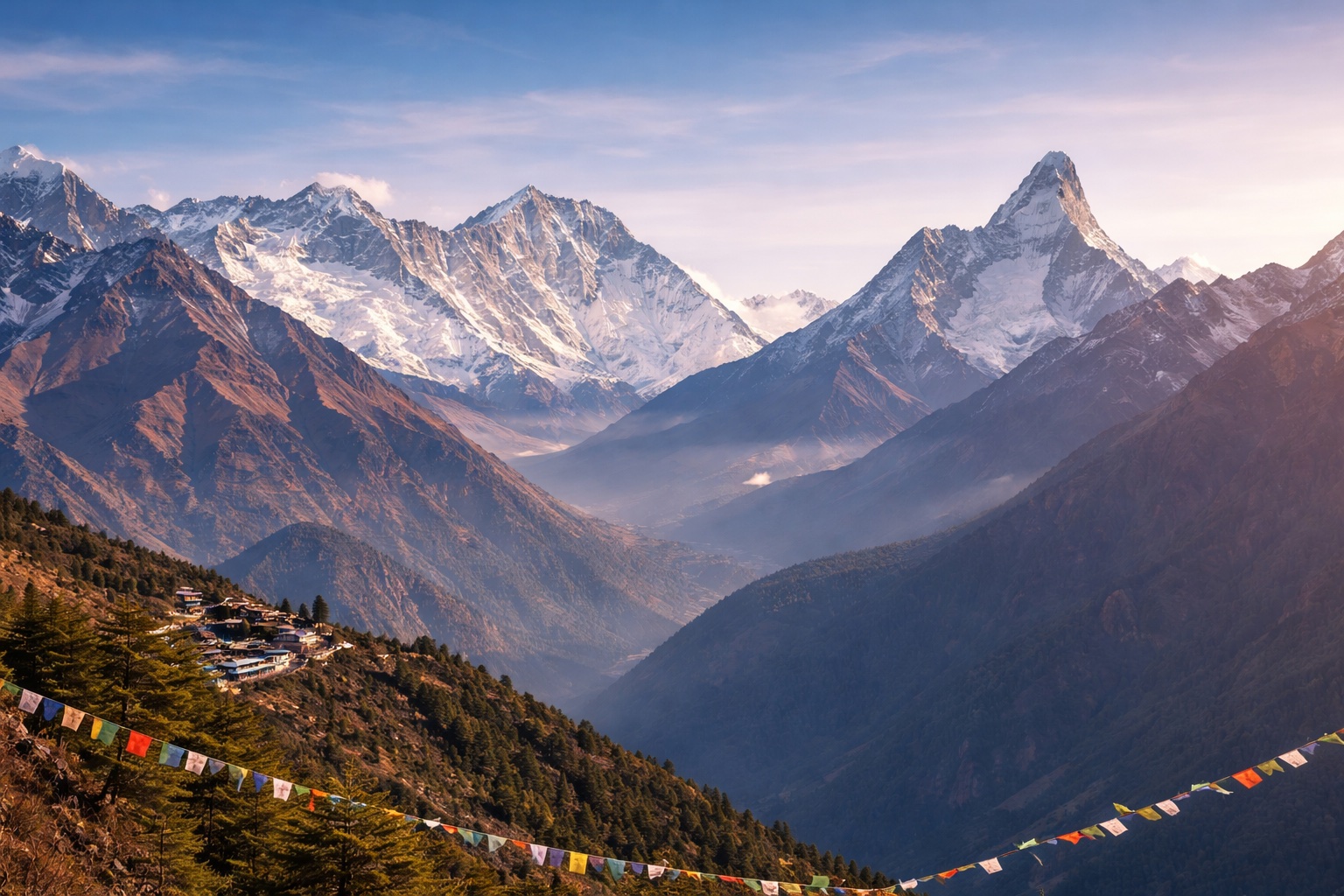
Tsum Valley Trek
The Tsum Valley trek is a 15-day journey into the sacred Beyul Kyimolung, the "hidden valley of happiness" in the northern Manaslu region. The trail follows the Budhi Gandaki gorge and then turns into a peaceful Himalayan valley of Tibetan Buddhist villages, long mani walls, the nunnery of Rachen Gompa, Milarepa's Cave and the remote monastery of Mu Gompa (3,700 m) near the Tibetan border.
Tsum opened to trekkers only in 2008, and its culture of non-violence (no animal slaughter) remains strong. The trek is a restricted area trek requiring a special permit, two trekkers and a guide. It is graded moderate to challenging and best from March–May and September–November. Permits, transport, guide, porters and lodges are included.
Trip highlights
- The sacred "hidden valley of happiness", open since 2008
- Mu Gompa (3,700 m) near the Tibetan border
- Rachen Gompa nunnery and Milarepa's Cave
- Tibetan Buddhist villages, mani walls and chortens
- Budhi Gandaki gorge and views of Ganesh Himal
Short itinerary
View detailed itinerary- Day 1 Arrival in Kathmandu (1,400 m) 1,400 m
- Day 2 Drive to Machha Khola (930 m) 930 m
- Day 3 Trek to Jagat (1,340 m) 1,340 m
- Day 4 Trek to Lokpa (2,240 m) 2,240 m
- Day 5 Trek to Chumling (2,386 m) 2,386 m
- Day 6 Trek to Chhokangparo (3,010 m) 3,010 m
- Day 7 Trek to Nile (3,361 m) via Milarepa's Cave 3,361 m
- Day 8 Trek to Mu Gompa (3,700 m) 3,700 m
- Day 9 Explore Mu Gompa and Dhephu Doma Gompa 3,800 m
- Day 10 Trek to Rachen Gompa (3,240 m) 3,240 m
- Day 11 Trek to Dumje (2,440 m) 2,440 m
- Day 12 Trek to Philim (1,570 m) 1,570 m
- Day 13 Trek to Machha Khola (930 m) 930 m
- Day 14 Drive to Kathmandu 1,400 m
- Day 15 Departure from Kathmandu 1,400 m
Tsum Valley Trek overview
For centuries, the Tsum Valley was a pilgrimage destination known to Tibetan Buddhists as one of the hidden valleys blessed by Guru Rinpoche. The great yogi Milarepa is said to have meditated in a cave here. The people of Tsum, the Tsumba, speak their own Tibetan dialect and follow a tradition that forbids hunting and killing animals.
The trek begins with the lower Manaslu Circuit along the Budhi Gandaki, then climbs steeply at Lokpa into the Tsum Valley. Days are spent walking between villages such as Chumling, Chhokangparo and Nile, visiting monasteries and nunneries, with views of Ganesh Himal, Shringi Himal and the Boudha Himal range.
Tsum Valley trek at a glance
| Trip fact | Details |
|---|---|
| Duration | 15 days from Kathmandu (12 days of trekking) |
| Highest point | Mu Gompa, 3,700 m |
| Grade | Moderate to challenging |
| Permits | Tsum Valley restricted area permit, MCAP and ACAP |
| Minimum group | 2 trekkers with a licensed guide |
| Accommodation | Teahouses, homestays and monastery guesthouses |
| Best time | March–May and September–November |
Why trek the Tsum Valley?
- Living Tibetan Buddhist culture, largely untouched by tourism.
- Mu Gompa and Rachen Gompa monasteries.
- Milarepa's Cave (Piren Phu) and sacred sites.
- Lower altitude than most remote treks: highest point 3,700 m.
- Combine with the Manaslu Circuit for a longer adventure.
How difficult is it?
The altitude is modest, but the trek is long and the Budhi Gandaki trail is rough, with many ups and downs, suspension bridges and landslide sections. Expect 6–7 hours of walking a day. Previous hiking experience is helpful.
Permits
The Tsum Valley is a restricted area. You need a special permit, the Manaslu Conservation Area Permit and, if exiting through Annapurna, the ACAP. We arrange all permits; at least two trekkers and a licensed guide are required.
Day-by-day itinerary
What’s included
Included
- Airport pick-up and drop-off in private vehicles
- 2 nights in a hotel in Kathmandu with breakfast
- Road transport Kathmandu – Machha Khola – Kathmandu by jeep
- Tsum Valley restricted area permit and Manaslu Conservation Area Permit (MCAP)
- Teahouse, homestay and monastery accommodation during the trek (12 nights)
- Breakfast, lunch and dinner during the trek
- Licensed, English-speaking trekking guide trained in first aid
- Porters (1 porter for 2 trekkers) with their wages, food, lodging and insurance
- All government and local taxes
Not included
- International flights to and from Kathmandu
- Nepal visa fee
- Travel insurance covering trekking to 4,000 m and helicopter evacuation (compulsory)
- Lunch and dinner in Kathmandu and Pokhara
- Drinks, snacks, hot showers, battery charging and Wi-Fi on the trek
- Extra nights caused by early return, flight delays, landslides or cancellations
- Helicopter evacuation or charter
- Personal equipment and expenses
- Tips for your guide and porters
Useful info
Fitness and preparation
You should be comfortable walking 6–7 hours a day for many days in a row on rough trails with steep climbs and descents. Train for two to three months with long hill walks.
Altitude sickness
This trek reaches 3,700 m at Mu Gompa, with a possible hike higher. Symptoms of acute mountain sickness include headache, nausea, dizziness, loss of appetite and poor sleep. Walk slowly, drink 3–4 litres of water a day, avoid alcohol and tell your guide about any symptoms. If symptoms get worse, descending is the most effective treatment. Talk to your doctor before the trip about whether altitude medication is right for you.
Weather and temperatures
The lower gorge is warm and humid; the upper valley is dry, sunny by day and cold at night, especially from November.
Permits
The Tsum Valley restricted area permit and the Manaslu Conservation Area Permit are included. A minimum of two trekkers and a licensed guide are required.
Money, charging and Wi-Fi
Take out cash in Kathmandu or Pokhara before you set off: there are very few ATMs on the trail, and the ones that exist often don't work. Lodges charge a little for hot showers, charging and Wi-Fi, so a power bank saves money.
Drinking water
Bring a refillable bottle and either purification tablets or a filter. Lodges also sell boiled water, which is cheaper and better for the trail than bottled water.
Travel insurance
Travel insurance is compulsory. It must cover trekking to 4,000 m, medical treatment and emergency helicopter evacuation. Please send us your policy details before departure.
Visa
Most visitors get a tourist visa on arrival at Kathmandu airport, or apply online before they fly. Your passport needs six months' validity, and bring a few passport photos for trekking permits.
Packing list
Clothing
- Moisture-wicking base layers
- Fleece jacket or mid-layer
- Warm down jacket (can be borrowed from us)
- Waterproof and windproof jacket and trousers
- Trekking trousers and shirts
- Warm hat, sun hat and buff
- Liner gloves and insulated gloves
- Trekking socks
Footwear
- Broken-in waterproof trekking boots
- Camp shoes or sandals for the lodges
Equipment
- Sleeping bag rated to about −10°C (can be borrowed from us)
- Daypack of 25–35 litres with rain cover
- Trekking poles
- Head torch with spare batteries
- Water bottles and purification tablets
- Sunglasses with UV protection
- Power bank and charging cables
- Leech socks (spring and monsoon)
- Modest clothing for monastery visits
Personal items
- High-factor sunscreen and lip balm
- Personal first-aid kit and medication
- Toiletries, quick-dry towel and wet wipes
- Snacks such as energy bars and nuts
- Passport, insurance details and copies
Add-ons & trip options
Choose add-ons and quantities on the booking form.
More trip options, quoted on request:
- Tsum Valley and Manaslu Circuit combined (about 21 days), crossing the Larkya La.
- Extra days at monasteries for meditation or festivals.
- Pokhara rest days after the trek.
Frequently asked questions
In the northern Manaslu region of Gorkha district, bordering Tibet.
Tsum is one of the "beyul", sacred hidden valleys blessed by Guru Rinpoche in Tibetan Buddhism.
Yes. A special permit, a minimum of two trekkers and a licensed guide are required.
Moderate to challenging: the altitude is modest (3,700 m), but the trek is long and the trails are rough.
Mu Gompa, about 3,700 m.
Yes, the combined trek takes about 21 days and crosses the Larkya La (5,106 m).
March–May and September–November.
Basic teahouses, homestays and monastery guesthouses, a real part of the experience.
Yes: Mu Gompa, Rachen Gompa, Dhephu Doma and Milarepa's Cave. Dress modestly and ask before photographing.
Most villages have electricity or solar power, but charging can be limited.
15 days from Kathmandu.
You pay per person, with a discount for groups (see the price box). Restricted area permits are included.