
Kanchenjunga trekking guide: base camps of the world's third-highest mountain
Kanchenjunga (8,586 m) rises on the border between Nepal and the Indian state of Sikkim, at the far eastern end of Nepal's Himalaya. It is the third-highest mountain in the world and, for many who have seen it, one of the most beautiful. Its name is usually translated from Tibetan as "the five treasures of the great snow", referring to its five summits. The region around it is one of the wildest and least visited trekking areas in Nepal, with deep valleys, glaciers, high passes and villages where life still follows the rhythm of the seasons.
This guide explains everything you need to know about trekking to Kanchenjunga: the North and South Base Camp routes, a typical itinerary, how to get to the trailhead, permits and rules, the best seasons, difficulty and altitude, teahouses, wildlife and culture. It is written by the Himalayan Hiking team in Kathmandu.
Why trek to Kanchenjunga?
Kanchenjunga offers something that is increasingly rare in the Himalaya: a long, remote trek through unspoiled country with very few other trekkers. While the Everest and Annapurna trails see tens of thousands of visitors each year, the Kanchenjunga region sees only a small fraction of that number. You may walk for hours without meeting another trekker, and in the villages you are welcomed as a guest rather than a customer.
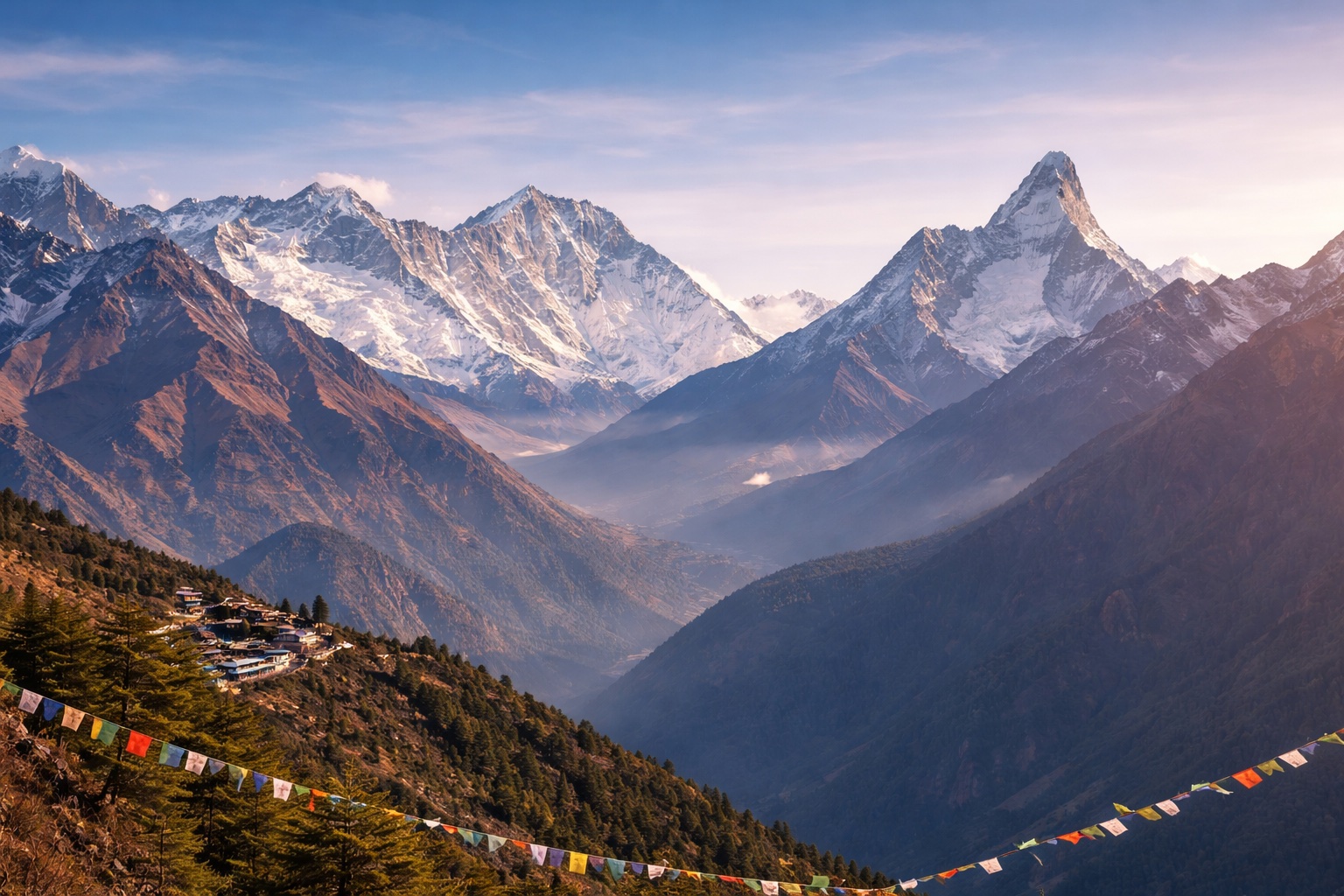
The scenery is on a grand scale. At Pangpema, the North Base Camp, you stand beneath Kanchenjunga's immense north face, surrounded by glaciers and peaks such as Jannu (Kumbhakarna), Wedge Peak and the Twins. On the southern side, the Yalung Glacier leads to views of the mountain's south face from Oktang. Between them, high passes cross ridges with views stretching towards Makalu and Everest on clear days.
Don't rush the lower valleys: terraced fields, cardamom plantations, forests of rhododendron, oak and bamboo, and villages of the Limbu, Rai and Sherpa peoples, each with their own traditions.
The Kanchenjunga Conservation Area
The trek takes place within the Kanchenjunga Conservation Area, established in 1997 and managed with strong involvement of local communities. It borders protected areas in Sikkim and Tibet and forms part of a vast transboundary landscape that is important for Himalayan wildlife.
The conservation area is home to the endangered red panda, which lives in the bamboo and rhododendron forests of the middle hills, as well as the snow leopard, Himalayan black bear, blue sheep, Himalayan tahr, musk deer and many species of birds, including several pheasants. The forests of eastern Nepal are among the wettest and richest in the country, and in spring the rhododendron and magnolia are in full flower.
The main Kanchenjunga treks
Kanchenjunga Base Camp Circuit
The classic Kanchenjunga Circuit visits both base camps. It usually begins at Taplejung and follows the Tamor river north to the villages of Chirwa, Sekathum and Amjilosa, then climbs the Ghunsa Khola valley to the Tibetan-style village of Ghunsa (about 3,595 m). From there it continues through Kambachen and Lhonak to Pangpema (5,143 m), the North Base Camp. After returning to Ghunsa, the route crosses the Sele La and Sinelapche La passes to Tseram, then climbs to Ramche and the viewpoint of Oktang above the Yalung Glacier for the South Base Camp. The descent leads through forests and villages back to Taplejung. The full circuit takes around 20–26 days from Kathmandu.
Kanchenjunga North Base Camp trek
If you have less time, the North Base Camp trek goes up and back along the northern valleys to Pangpema. It takes in the biggest mountain scenery in the region and takes about 18–20 days.
Kanchenjunga South Base Camp trek
The South Base Camp trek visits Tseram, Ramche and Oktang via the southern valleys and the Yalung Glacier. It is shorter and lower than the northern route, taking about 14–16 days, and is a good introduction to the region.
Combining with other eastern treks
Experienced trekkers can combine Kanchenjunga with the remote Makalu Barun region or the Lumba Sumba pass, which links Kanchenjunga with the Makalu area through some of the least visited valleys in Nepal. These are long, demanding treks with basic facilities and are best suited to those who have trekked in Nepal before.
Kanchenjunga Circuit: a typical itinerary
Itineraries vary with road conditions and the direction of the circuit. This is a typical route; altitudes are approximate.
| Day | Route | Overnight altitude |
|---|---|---|
| 1 | Fly Kathmandu to Bhadrapur, drive to Ilam or Phidim | About 1,200 m |
| 2 | Drive to Taplejung and on to the trailhead | About 1,200 m |
| 3–5 | Trek up the Tamor valley via Chirwa and Sekathum to Amjilosa | 1,270–2,500 m |
| 6 | Amjilosa to Gyabla through forest | 2,730 m |
| 7 | Gyabla to Ghunsa | 3,595 m |
| 8 | Acclimatisation day in Ghunsa, visit the monastery | 3,595 m |
| 9 | Ghunsa to Kambachen, views of Jannu | 4,050 m |
| 10 | Rest and acclimatisation at Kambachen | 4,050 m |
| 11 | Kambachen to Lhonak | 4,780 m |
| 12 | Day trip to Pangpema (North Base Camp, 5,143 m), return to Lhonak | 4,780 m |
| 13–14 | Return to Ghunsa | 3,595 m |
| 15 | Ghunsa to Sele Le, below the passes | 4,290 m |
| 16 | Cross Sele La and Sinelapche La to Tseram | 3,870 m |
| 17 | Tseram to Ramche, visit Oktang (South Base Camp viewpoint) | 4,580 m |
| 18–21 | Descend via Tortong, Yamphudin and forest villages to the road | — |
| 22–23 | Drive to Bhadrapur and fly to Kathmandu | — |
Extra days are often added for weather or acclimatisation. Our trip pages show the exact itinerary for each departure.
Getting to the Kanchenjunga trailhead
Reaching the start of the trek is part of the adventure. The usual route is a flight from Kathmandu to Bhadrapur or Biratnagar in the eastern plains, followed by a long drive through the tea gardens of Ilam and the hills of Phidim to Taplejung, the district headquarters. The drive can take one or two days depending on road conditions. Taplejung has a small airstrip at Suketar, but flights are infrequent and unreliable, so most trekkers travel by road.
From Taplejung, jeeps can now reach further up the valleys, shortening the approach. Near Taplejung, the hilltop temple of Pathibhara Devi is an important pilgrimage site for Hindus and Buddhists and can be visited before or after the trek.
Permits and rules
The Kanchenjunga region is a restricted area. You need:
- Kanchenjunga Restricted Area Permit, charged per week.
- Kanchenjunga Conservation Area Permit.
Restricted area permits are issued only through a registered trekking agency, for groups of at least two trekkers accompanied by a licensed guide. Independent trekking is not permitted. Himalayan Hiking arranges all permits before you travel and confirms current regulations when you book.
Best time to trek Kanchenjunga
Autumn: October to November
Autumn is the best season, with stable weather, clear skies and the best views of Kanchenjunga and Jannu. Nights at Lhonak and Pangpema are very cold, but days are often bright and calm.
Spring: April to May
Spring is the second main season. The lower and middle forests are ablaze with rhododendrons and magnolias, and temperatures are warmer. Clouds often build in the afternoons, and early spring can bring snow on the passes.
Winter and monsoon
In winter, heavy snow can block the Sele La and the upper valleys, and many lodges close. The monsoon, from June to September, brings very heavy rain to eastern Nepal, with leeches, landslides and cloud hiding the mountains. Treks are not recommended in these seasons.
How difficult is the Kanchenjunga trek?
The Kanchenjunga trek is graded challenging. It is long, with most itineraries lasting three weeks or more, and involves many days of six to eight hours' walking with steep ascents and descents on rough trails. The route reaches 5,143 m at Pangpema, and the crossing between the base camps involves passes of around 4,500–4,700 m. Rescue and medical facilities are limited because of the remoteness.
We recommend this trek for people who have already completed at least one multi-day trek at altitude, such as Everest Base Camp or the Annapurna Circuit, and who enjoy remote conditions. Prepare with long hikes over several consecutive days, cardiovascular training and leg-strength exercises for at least three months before your trip.
Altitude and safety
Good acclimatisation is essential. Our itineraries include rest days at Ghunsa and Kambachen and a gradual ascent to Lhonak before visiting Pangpema. Guides carry a comprehensive first-aid kit and pulse oximeter, check every trekker daily and will adjust plans if anyone shows signs of altitude sickness. Because the region is remote, communication can be limited; guides use the available mobile networks and, where needed, satellite communication to stay in touch with our Kathmandu office. Travel insurance covering trekking to at least 5,500 m and helicopter evacuation is essential.
Teahouses and food on the Kanchenjunga trek
Until recently, Kanchenjunga was a camping trek. Today, simple teahouses operate along both the northern and southern routes, making it possible to trek without tents. Lodges are basic: rooms are often shared, facilities are simple and hot showers are rare in the higher villages. At some stops, especially during busy periods, accommodation may be in simple dormitories or huts. Many trekkers find this simplicity part of the charm.
Menus are shorter than on the popular trails, but dal bhat, noodles, potatoes, eggs, Tibetan bread and soups are available. Local specialities include tongba, a warm millet drink traditional among the Limbu people, and the region's famous cardamom and tea from Ilam. There are no ATMs beyond Taplejung, so bring enough cash for the whole trek.
Culture of the Kanchenjunga region
The lower valleys are home to the Limbu people, one of the indigenous groups of eastern Nepal, with their own language, script and religion, Kirat Mundhum, which honours ancestors and nature. Higher up, in villages such as Ghunsa and Kambachen, communities of Sherpa and Tibetan origin follow Tibetan Buddhism, with monasteries, prayer flags and mani walls. Trekking through the region is a journey across cultures as well as landscapes, and our guides will help you learn about local traditions and festivals.
What to pack for Kanchenjunga
- Sturdy, waterproof trekking boots and gaiters for wet or snowy trails.
- A full layering system, including a warm down jacket rated well below freezing.
- A four-season sleeping bag.
- Waterproof jacket and trousers, and a pack cover for rain in the lower valleys.
- Microspikes for icy sections on the passes.
- Trekking poles, a head torch, a power bank and spare batteries.
- Water purification tablets or a filter.
- A comprehensive personal first-aid kit.
Responsible trekking in eastern Nepal
The Kanchenjunga region is still relatively untouched by mass tourism, and trekkers have a responsibility to keep it that way. Carry out all non-biodegradable waste, use purification rather than bottled water, stay in local lodges, and respect local customs and sacred sites. Choose a company that pays and equips its guides and porters properly for the harsh conditions of this remote trek.
Villages along the Kanchenjunga trail
The villages of the Kanchenjunga region are among the most traditional on any trek in Nepal. In the lower Tamor valley, Chirwa and Sekathum are small farming settlements where cardamom is grown under the forest canopy. Higher up, Ghunsa is the largest village on the northern route, a Sherpa and Tibetan-origin settlement of wooden houses, prayer flags and a small monastery, where many trekkers spend an acclimatisation day.
Beyond Ghunsa, Kambachen is a seasonal settlement in a wide valley right under Jannu's north face, and Lhonak is a high yak pasture on the edge of the Kanchenjunga Glacier. On the southern side, Tseram and Ramche are small clusters of lodges in the Yalung valley, while Yamphudin, on the descent, is a Limbu and Sherpa village surrounded by terraced fields.
Mountaineering history of Kanchenjunga
Kanchenjunga was once believed to be the highest mountain in the world, until surveys in the mid-19th century showed that Everest was higher. The first ascent was made on 25 May 1955 by the British climbers Joe Brown and George Band. Following a promise made to the Chogyal (king) of Sikkim, who regarded the summit as sacred, they stopped a few metres short of the true top, a tradition of respect that many climbers have followed since. The mountain is still considered one of the most difficult and dangerous of the 8,000-metre peaks, and relatively few people have climbed it.
Kanchenjunga, Everest or Manaslu?
Trekkers looking for a big Himalayan trek often compare Kanchenjunga with Everest and Manaslu. The Everest Base Camp trek has the best facilities, excellent lodges and the world's highest mountain, but is busy in peak season. The Manaslu Circuit is quieter, with a high pass and strong Tibetan culture, in about two weeks. The Kanchenjunga trek is the longest and most remote of the three, with the fewest trekkers, the most basic lodges and a true sense of wilderness. It is best for experienced trekkers with three weeks or more who value solitude above comfort.
Extending your trip in eastern Nepal
Eastern Nepal has much more to offer before or after your trek. The hill district of Ilam is famous for its rolling tea gardens, where you can visit estates and taste some of Nepal's finest orthodox tea. The hilltop temple of Pathibhara Devi near Taplejung is an important pilgrimage site, and Koshi Tappu Wildlife Reserve in the plains is one of the best birdwatching areas in the country, especially in winter.
Fitness and training for Kanchenjunga
A three-week trek in remote country demands excellent fitness and stamina. Start training at least three to four months before your trip. Build up to long hill walks of six to eight hours with a loaded daypack, and complete several weekends of back-to-back long days. Add cardiovascular exercise four or five times a week and strength training for the legs and core. Previous experience of a long trek at altitude is the best preparation, as it shows how your body responds to many days of walking and to altitudes above 5,000 m.
What does a Kanchenjunga trek cost?
The Kanchenjunga trek is one of the more expensive treks in Nepal because of its length, the restricted area permit charged per week, domestic flights to the eastern plains and the long overland journey to Taplejung. The price depends on the route, group size and number of days. Most packages include permits, flights and transport, teahouse accommodation, meals on the trek, a licensed guide and porters. Budget separately for your visa, insurance, equipment, snacks and tips.
Money and communication
There are no ATMs beyond Taplejung, so carry enough Nepali rupees for the whole trek, including drinks, snacks, charging and tips. Electricity in the higher lodges is often solar-powered and limited, so bring a power bank. Mobile coverage is available in some villages but absent on long stretches, and your guide carries a phone and, where needed, satellite communication for emergencies.
Wildlife and plants of the Kanchenjunga region
Eastern Nepal receives more rain than the west, and its forests are among the richest in the Himalaya. In spring, more than twenty species of rhododendron flower on the hillsides around Tseram and Yamphudin, together with magnolias and orchids. Higher up, alpine meadows bloom with primulas, gentians and edelweiss in summer. The forests shelter the red panda, which feeds on bamboo, as well as barking deer, musk deer and many birds, including the blood pheasant and satyr tragopan. Above the tree line, blue sheep graze on the slopes, and the tracks of the snow leopard are occasionally seen near Lhonak and Pangpema.
Camping or teahouse trek?
With teahouses now available along the main routes, most trekkers choose a teahouse trek, which is lighter and more flexible. A camping trek, with a crew carrying tents, food and cooking equipment, is still an option for those who want more comfort in the higher sections, more privacy, or a route that includes remote side valleys and passes without lodges. Camping treks cost more and need a larger team, but this is how Himalayan trekking used to be done, and it still has its fans.
Responsible photography and cultural respect
The people of the Kanchenjunga region see few foreign visitors. Always ask before photographing people, especially at religious sites and ceremonies, and respect a refusal. Remove your shoes before entering homes and monasteries, walk clockwise around chortens and mani walls, and accept offers of tea or tongba graciously. Small gestures of respect make a big difference in remote communities.
Travel insurance for Kanchenjunga
Because the Kanchenjunga region is so remote, good travel insurance is essential. Your policy should cover trekking up to at least 5,500 m, medical treatment and emergency helicopter evacuation from remote areas. Check that it has no exclusions for restricted areas or for treks of three weeks or more. Keep your policy number and the insurer's emergency contact details with you, and share them with your guide, who will coordinate any rescue with our office in Kathmandu.
Above all, the Kanchenjunga trek rewards patience and a spirit of adventure. Days are long and facilities simple, but the reward is a Himalaya that few people ever see: vast glaciers, quiet villages and the silent north face of one of the greatest mountains on Earth. With good preparation, a strong team and a flexible itinerary, it can be the trek of a lifetime. Many trekkers who finish it say the people they met in the villages stayed with them as much as the mountains did.
Book your Kanchenjunga trek with Himalayan Hiking
Our office is in Kathmandu. We organise the full Kanchenjunga Base Camp Circuit and the North and South Base Camp treks, with domestic flights, overland transport, restricted area permits, lodges, experienced licensed guides and porters. Our itineraries include proper acclimatisation and reserve days for weather.
Browse our Kanchenjunga treks above, or contact us with your dates and experience, and we will send a detailed itinerary and quote.