
Peak climbing in Nepal: a complete guide to your first Himalayan summit
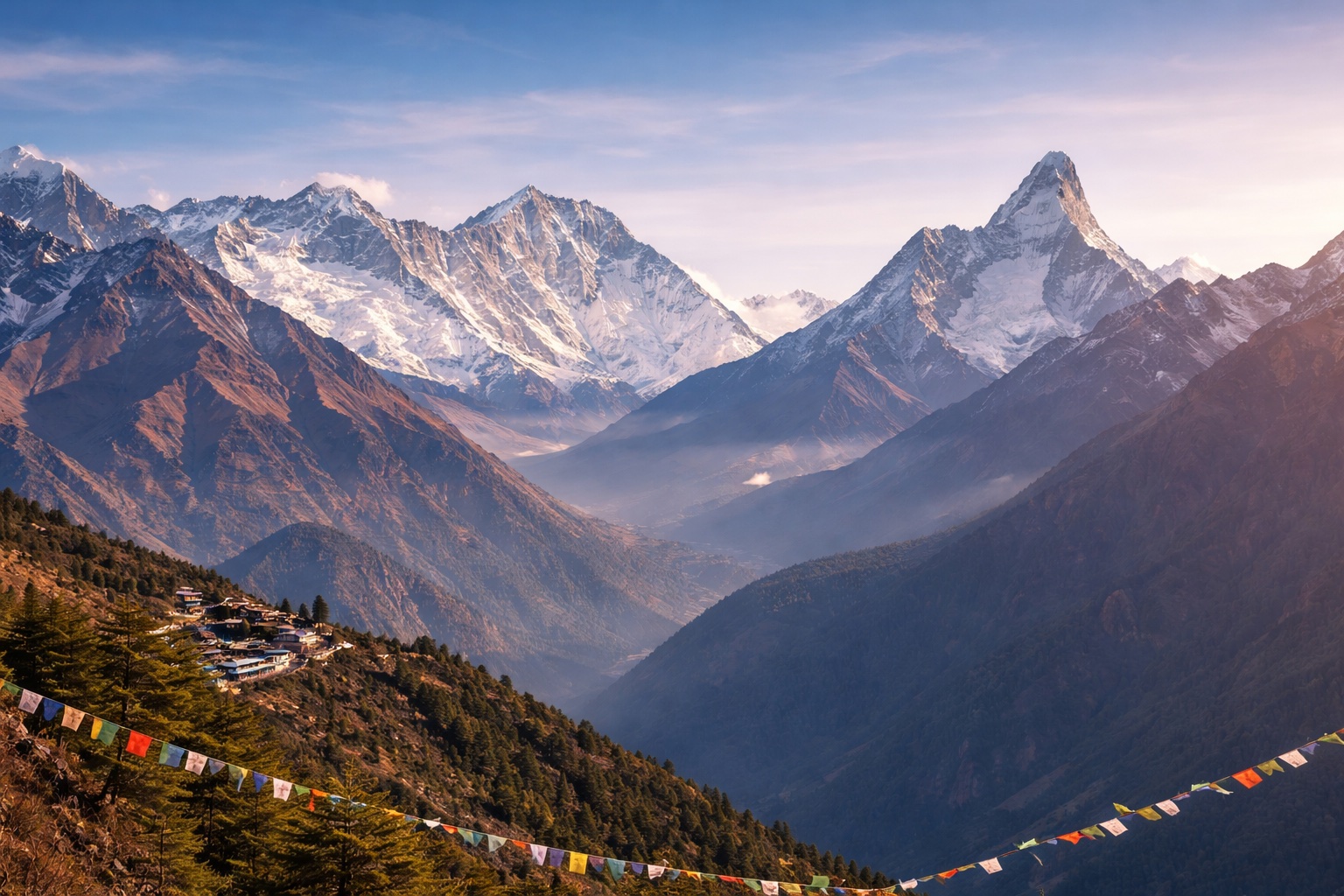
Standing on the summit of a Himalayan peak, roped to your guide, with Everest, Lhotse and Makalu spread out around you, is an experience few people forget. Peak climbing in Nepal makes this possible for fit trekkers who want to go beyond the base camps. Dozens of peaks between 5,500 and 6,500 metres can be climbed on guided trips that combine a classic trek for acclimatisation with a short climbing phase on snow, ice and rock.
This guide explains how peak climbing works in Nepal, compares the most popular peaks, describes what a climbing day involves, and covers skills and training, equipment, permits, seasons, safety and costs. It is written by the Himalayan Hiking team in Kathmandu, who organise climbs with experienced, licensed climbing guides.
What is a "trekking peak"?
In Nepal, mountains are divided into categories for permit purposes. The best known are the so-called trekking peaks, officially "NMA peaks", for which climbing permits are issued through the Nepal Mountaineering Association. Despite the name, they are real mountains: most require crampons, an ice axe, a harness and fixed ropes on the steeper sections, and summit days are long and demanding. Higher and more technical mountains, known as expedition peaks, are managed by the Department of Tourism and require larger expeditions.
What makes trekking peaks special is accessibility. They rise directly above popular trekking routes, so you acclimatise naturally on the approach, and the climbing itself is usually completed in three to five days from base camp. With good preparation and a strong guide, they are the ideal introduction to Himalayan mountaineering.
The most popular climbing peaks in Nepal
Island Peak (Imja Tse), 6,165 m
Island Peak is the most climbed trekking peak in Nepal. It rises from the Imja valley above Chhukung in the Everest region, like an island in a sea of ice, with the vast south face of Lhotse behind it. The climb usually follows the Everest Base Camp trek for acclimatisation. From base camp, the route climbs rocky slopes to a high camp or crampon point, crosses a glacier with crevasses, then ascends a steep snow and ice headwall of around 100 metres on fixed ropes to a narrow summit ridge. The summit view includes Lhotse, Makalu, Baruntse and Ama Dablam.
Mera Peak, 6,476 m
Mera Peak is the highest trekking peak in Nepal. It lies south of Everest in the remote Hinku valley and is reached through quiet forests and yak pastures via the Zatrwa La pass or a longer approach from the south. Technically, Mera is straightforward, mainly a long glacier walk on moderate snow slopes, with a short steeper section below the summit. The challenge is its altitude. From the top, you can see five of the world's six highest mountains: Everest, Kanchenjunga, Lhotse, Makalu and Cho Oyu.
Lobuche East, 6,119 m
Lobuche East rises above the village of Lobuche on the Everest Base Camp trail. It is more technical than Island Peak, with steeper snow and ice slopes, exposed sections on the summit ridge and fixed ropes for much of the upper route. It is a good choice for those with some previous climbing experience and is often combined with the Everest Base Camp trek or used by expeditions for acclimatisation.
Yala Peak, 5,732 m
Yala Peak in the Langtang region is one of the easiest trekking peaks in Nepal and an excellent first climb. It is reached from Kyanjin Gompa on the Langtang Valley trek, and the route involves rocky slopes and a short glacier and snow section to the summit, with views of Shishapangma in Tibet and the Langtang range. It needs less time than Everest region climbs.
Pisang Peak and Chulu peaks
In the Annapurna region, Pisang Peak (6,091 m) and Chulu West (6,419 m) are climbed from the Annapurna Circuit, combining one of the world's great treks with a Himalayan summit. Pisang Peak has a steep, exposed final snow slope, while the Chulu peaks are longer, more serious climbs.
Tent Peak (Tharpu Chuli), 5,663 m
Tent Peak rises inside the Annapurna Sanctuary and is climbed from Annapurna Base Camp. You look straight across to Annapurna I, Machhapuchhre and the Sanctuary's ring of peaks, and it fits naturally into the Annapurna Base Camp trek.
Expedition peaks
For experienced mountaineers, Nepal offers expeditions to peaks such as Ama Dablam (6,812 m), one of the most beautiful and technical climbs in the Himalaya, Himlung Himal (7,126 m), a popular first 7,000-metre peak, and the 8,000-metre giants, including Manaslu and Everest. These require significant climbing experience, and we are happy to discuss them with experienced climbers.
Comparing Nepal's popular climbing peaks
| Peak | Height | Region | Typical trip length | Technical level |
|---|---|---|---|---|
| Yala Peak | 5,732 m | Langtang | 12–14 days | Easier |
| Tent Peak | 5,663 m | Annapurna | 13–15 days | Moderate |
| Mera Peak | 6,476 m | Everest (Hinku) | 16–19 days | Moderate, high altitude |
| Island Peak | 6,165 m | Everest | 16–20 days | Moderate, fixed-rope headwall |
| Pisang Peak | 6,091 m | Annapurna | 18–20 days | Moderate to difficult |
| Lobuche East | 6,119 m | Everest | 17–20 days | More technical |
| Chulu West | 6,419 m | Annapurna | 19–22 days | More technical |
What a peak climbing trip looks like
Most peak climbing trips follow the same structure:
- Arrival and preparation in Kathmandu: meet your guide, check and rent equipment, and complete permit formalities.
- Approach trek (7–12 days): a classic trek to the base of the mountain, with acclimatisation days and hikes to higher viewpoints. On Island Peak, this is often the Everest Base Camp trek.
- Base camp and training (1–2 days): set up at base camp and practise with your guide: fitting crampons, walking on snow, using the ice axe, clipping into fixed ropes, climbing with an ascender (jumar) and abseiling.
- High camp (optional): on some peaks, you move to a high camp to shorten summit day.
- Summit day: an early start, often around 1–3 in the morning, to climb while the snow is firm, reaching the summit in the morning and descending before afternoon winds or clouds.
- Reserve day: a spare day in case bad weather delays the summit attempt.
- Return trek to Lukla or the trailhead, and back to Kathmandu.
Summit day: what to expect
Summit day is the most demanding part of any climb. After a few hours' rest, you wake in the dark, drink hot tea, eat a light breakfast and set off by head torch. The first hours are usually on rock or moraine, followed by the glacier, where you rope up with your guide and put on crampons. On Island Peak, the crux is the steep headwall, where you climb fixed ropes using an ascender before following a narrow ridge to the summit. On Mera Peak, the challenge is a long, steady climb on snow at very high altitude.
Depending on the peak and conditions, the round trip takes 8–14 hours. Most climbers find the altitude and the cold the hardest parts, rather than the technical sections. Your guide sets a steady pace, monitors your condition and will turn back if the weather or your health makes continuing unsafe. Safety always comes before the summit.
Do I need climbing experience?
For peaks such as Yala, Mera and Island Peak, previous mountaineering experience is helpful but not essential. You should, however, be an experienced trekker who has spent time at altitude, ideally above 4,000–5,000 metres, and you must be in very good physical condition. The training session at base camp teaches the essential skills, and fixed ropes are used on steeper sections.
If you have never used crampons or an ice axe, a basic mountaineering course or a winter skills day at home before your trip will give you extra confidence. For more technical peaks such as Lobuche East, Chulu West and expedition peaks, previous climbing experience on snow and ice is required.
Training and fitness for peak climbing
Good fitness makes the difference between enjoying a climb and struggling through it. Start training at least three to four months before your trip. Focus on:
- Endurance: long hikes of six to eight hours with a loaded pack, including steep ascents, ideally on consecutive days.
- Cardiovascular fitness: running, cycling, swimming or stair climbing four to five times a week.
- Strength: squats, lunges, step-ups, deadlifts and core exercises to support long days on steep ground.
- Skills: scrambling, walking on steep and uneven ground and, if possible, practising with crampons and an ice axe.
Mental preparation matters too. Summit days are long and cold, and a positive, patient attitude helps you keep going.
Climbing equipment
In addition to a full trekking kit, you need technical climbing equipment:
- Insulated mountaineering boots compatible with crampons.
- Crampons, climbing harness, helmet and a mountaineering ice axe.
- Ascender (jumar), belay/abseil device, locking and non-locking carabiners and a sling.
- A warm down suit or expedition down jacket and insulated trousers.
- Warm mittens and gloves, balaclava, glacier glasses and ski goggles.
- A four-season sleeping bag rated to well below freezing.
Much of the technical equipment can be rented in Kathmandu or at the trailhead. Your guide checks all gear before the climb. We provide a detailed equipment list when you book.
Permits for peak climbing in Nepal
You need a climbing permit for the peak, issued through a registered trekking or expedition agency, plus the national park or conservation area permits for the region, such as the Sagarmatha National Park and Khumbu Pasang Lhamu Rural Municipality permits for Island Peak and Lobuche East. Climbing permit fees vary by peak and season. Some climbs also require a refundable garbage deposit, returned when you bring your waste back down. Himalayan Hiking arranges all permits and paperwork.
Best time for peak climbing
- Spring (April–May): the most popular season, with warmer temperatures and generally stable weather. Snow conditions are often good.
- Autumn (October–November): clear skies and excellent views, but colder temperatures on summit day, especially in November.
- Winter (December–February): very cold with strong winds; suitable only for experienced climbers on selected peaks.
- Monsoon (June–September): heavy snowfall and cloud at altitude; not recommended.
Safety and altitude
Altitude is the greatest risk on any Himalayan climb. Our itineraries include a gradual approach trek with acclimatisation days before any climbing. Guides carry a first-aid kit, a pulse oximeter and communication equipment, monitor every climber daily and follow strict turnaround times on summit day. Climbing guides are experienced on the specific peak and are supported by assistant guides on the rope for larger groups.
Your travel insurance must specifically cover mountaineering up to the height of your peak, usually 6,500 metres or more, as well as medical treatment and helicopter evacuation. Many standard travel policies exclude climbing, so check carefully.
Guides and climbing staff
A peak climb is a team effort. You are led by a licensed climbing guide with experience on the peak, often a Sherpa guide who has climbed it many times. Depending on group size, assistant climbing guides help fix ropes and support climbers on the mountain. Trekking guides and porters support the approach trek, and on some peaks a cook and kitchen staff run base camp. We pay our climbing staff fairly, provide proper equipment and insurance, and follow good practice for porter and staff welfare.
What does peak climbing in Nepal cost?
The cost of a peak climb depends on the peak, the length of the trip, the size of the group and whether you combine it with a trek. A typical package includes permits, domestic flights, accommodation, meals during the trek and climb, climbing and trekking guides, porters, group climbing equipment such as ropes and tents, and garbage deposit arrangements. Budget separately for personal equipment, rental gear, insurance, your Nepal visa, drinks and snacks on the trek, and tips for guides and porters. Contact us for a detailed quote for your chosen peak.
Leave no trace on the mountains
High mountain environments are fragile, and waste left on glaciers stays there for decades. We follow leave-no-trace principles on every climb: all rubbish, including human waste where required, is carried down, and garbage deposits help ensure that climbing teams bring their waste back. Using local lodges and staff on the approach trek also means your climb supports mountain communities.
Climbing grades explained
Himalayan climbs are often described using the French Alpine grading system, which gives a general idea of technical difficulty. F (facile, easy) means simple glacier walking and easy snow slopes, as on much of Mera Peak. PD (peu difficile, slightly difficult) involves steeper snow and ice, some exposure and short sections requiring fixed ropes, as on Island Peak and Yala Peak. AD (assez difficile, fairly difficult) involves sustained steep snow and ice, exposed ridges and more technical climbing, as on Lobuche East and Chulu West. Grades are only a guide: altitude, weather and snow conditions can make any route much harder on the day.
Choosing your first Himalayan peak
If you have never climbed before, choose a peak that matches your experience. Yala Peak is the gentlest introduction, with a short trek and modest altitude. Mera Peak is ideal if you are strong at altitude but new to technical climbing, as it is mostly a glacier walk. Island Peak is the classic first technical peak, adding a steep fixed-rope headwall and a narrow ridge. If you already have alpine experience, Lobuche East or Chulu West will offer more of a challenge. Our team is happy to discuss your experience and recommend the right peak.
Acclimatisation strategy
Successful climbs depend on careful acclimatisation. The approach trek is designed to gain height gradually, with rest days at key points and hikes to higher viewpoints before sleeping lower. For Island Peak, trekking to Everest Base Camp and climbing Kala Patthar first means you arrive at base camp well acclimatised. On Mera Peak, extra days in the Hinku valley and at Khare allow your body to adjust before moving to high camp. On summit day, a steady, sustainable pace is far more effective than speed.
Life at base camp and high camp
At base camp, you stay in tents or, on some routes, in simple lodges nearby. A camp cook and kitchen team prepare hot meals, and a dining tent provides shelter for eating, resting and briefings. At high camp, conditions are simpler, with small tents on rock or snow and a short rest before the early start. Nights are cold, so a good sleeping bag and warm layers are essential. Drinking plenty of fluids, eating well even when your appetite is low and resting between activities all help your body cope with the altitude.
Combining peaks and treks
Many climbers combine more than one peak or add a peak to a classic trek. Popular combinations include the Everest Base Camp trek with Island Peak, Island Peak and Lobuche East in a single trip, Mera Peak with the Amphu Labtsa pass into the Imja valley for experienced climbers, and the Annapurna Circuit with Pisang Peak or Chulu West. Longer trips such as the "Three Peaks" expeditions in the Everest region are designed for experienced climbers preparing for bigger mountains.
Weather and summit windows
Mountain weather is unpredictable, and even in the best seasons, high winds, fresh snow or poor visibility can delay a summit attempt. Our itineraries include at least one reserve day for this reason. Guides monitor weather forecasts, talk with other teams and assess conditions on the mountain before deciding when to go. If the weather does not allow a safe ascent, the team will turn back: the mountain will still be there, and safety is always more important than the summit.
After your climb
After descending, most climbers enjoy a celebration in the lodges of Chhukung, Dingboche or Khare before walking out. Back in Kathmandu, you will receive a summit certificate for NMA peaks, subject to the rules of the Nepal Mountaineering Association. Many climbers finish their trip with a few relaxing days in Pokhara or a jungle safari in Chitwan to recover.
Island Peak climb: a typical itinerary
| Days | Plan |
|---|---|
| 1–2 | Arrive in Kathmandu, equipment check and permits |
| 3–11 | Fly to Lukla and trek via Namche Bazaar, Tengboche and Dingboche to Everest Base Camp and Kala Patthar, with acclimatisation days |
| 12–13 | Trek to Chhukung and Island Peak Base Camp, climbing training |
| 14 | Summit day, return to base camp or Chhukung |
| 15 | Reserve day for weather |
| 16–18 | Trek back to Lukla via Namche Bazaar |
| 19–20 | Fly to Kathmandu, spare day and departure |
A shorter version approaches Island Peak directly via Dingboche and Chhukung without visiting Everest Base Camp, but we recommend the longer itinerary for better acclimatisation.
Nutrition and hydration at altitude
Your body burns more energy at altitude, while your appetite often decreases. Eating enough is essential for strength on summit day. Choose carbohydrate-rich meals such as dal bhat, pasta and potatoes, and carry snacks such as nuts, chocolate, energy bars and dried fruit. Drink three to four litres of fluid a day, including soups and warm drinks, and avoid alcohol until you are back at lower altitude.
Standing on a Himalayan summit is the result of months of preparation, careful acclimatisation and teamwork with your guides. Choose the right peak, train well and stay patient with the weather, and you give yourself the best chance of success, while enjoying every step of the journey through the mountains.
Climb with Himalayan Hiking
Himalayan Hiking is a local trekking and climbing company based in Kathmandu. We organise guided climbs of Island Peak, Mera Peak, Lobuche East, Yala Peak and other trekking peaks, as well as expeditions for experienced mountaineers. Our itineraries include proper acclimatisation, training at base camp, reserve summit days and experienced climbing guides. Join a group climb or book a private expedition on your own dates.
Browse our climbing trips above, or contact us with your experience and goals, and we will recommend the right peak for you.