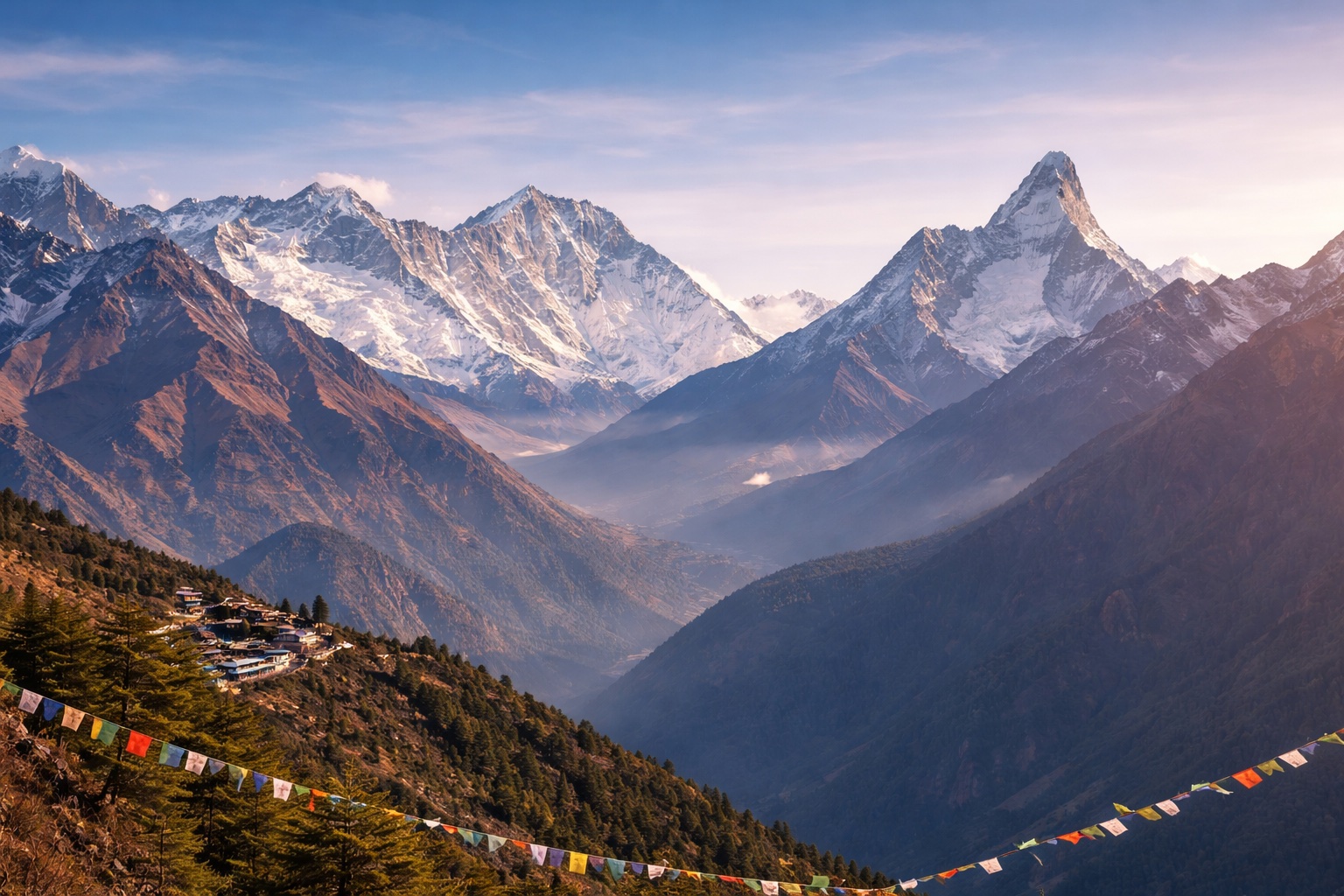
The Everest Base Camp luxury lodge trek follows the classic route to Everest Base Camp (5,364 m) and Kala Patthar (5,545 m), but with the best comfort the Khumbu offers. Stay in a 5-star hotel in Kathmandu and in luxury lodges in Phakding, Namche Bazaar, Deboche and Lukla, with attached bathrooms, hot showers, heated rooms and proper beds, and in the best available teahouses higher up.
A senior guide, extra porter support and an unhurried 14-day itinerary with two acclimatisation days: this is for people who want Everest without roughing it. The trek is graded challenging because of the altitude and is best from March–May and September–December. Flights, permits, all meals on the trek and airport transfers are included.
Nothing can make Everest Base Camp low or short, but the right lodges make a big difference to how you feel every evening. On this trek you stay in the luxury lodge network of the Khumbu for the lower nights, where rooms have en-suite bathrooms, electric blankets and good food, and in the best rooms of the best teahouses above Dingboche, where no luxury lodges exist. In Kathmandu you stay in a 5-star heritage hotel before and after the trek.
The route is the classic one: Lukla, Namche Bazaar, Tengboche, Dingboche, Lobuche, Gorak Shep, Everest Base Camp and Kala Patthar. The pace is relaxed, with acclimatisation days in Namche and Dingboche, and your guide is one of our most experienced Everest leaders.
| Trip fact | Details |
|---|---|
| Duration | 14 days from Kathmandu (11 days of trekking) |
| Highest point | Kala Patthar, 5,545 m |
| Kathmandu hotel | 5-star hotel (3 nights) |
| Luxury lodges | Lukla, Phakding, Namche Bazaar, Deboche (en-suite rooms) |
| Higher up | Best available teahouses, attached bathrooms where possible |
| Grade | Challenging |
| Guide | Senior licensed guide, porter support 1:1 |
| Best time | March–May and September–December |
Above Dingboche there are no luxury lodges. At Lobuche and Gorak Shep, even the best rooms are simple and cold, bathrooms are often shared, and the altitude makes sleep hard. We book the best rooms available, but it is important to expect three or four basic nights. A helicopter return from Gorak Shep can be added to avoid the walk down.
Comfort does not change the altitude. You walk 5–7 hours a day on rocky trails and spend several nights above 4,000 m. Good fitness, a slow pace and listening to your guide are essential; no climbing experience is needed.
You should be comfortable walking 5–7 hours a day for several days in a row on hilly, uneven trails. Start training two to three months before the trek with long hill walks, stair climbing and cardiovascular exercise, and break in your boots before you travel.
The highest point is 5,545 m at Kala Patthar, with nights at 4,940 m and 5,164 m. Most people feel the altitude a little: a mild headache, poor sleep, less appetite. Go slowly, drink 3–4 litres a day, skip the beer until you are back down, and tell your guide straight away if you feel worse. Going down is the cure that always works. Ask your doctor before you travel whether altitude medication makes sense for you.
Luxury lodges are heated, but higher teahouses are cold at night (−10°C to −15°C in autumn). Days are often clear and sunny.
The Lukla flight has a baggage limit of about 15 kg per person including hand luggage. Weather can delay flights, so a spare day at the end of your trip is recommended.
The Sagarmatha National Park permit and the Khumbu Pasang Lhamu Rural Municipality fee are included.
Carry Nepali rupees for drinks, snacks, showers and charging, and get them in the city; mountain ATMs are rare and unreliable. Wi-Fi is available in many lodges for a small fee. A power bank is worth packing.
Buy boiled or filtered water at lodges or use purification tablets or a filter with a refillable bottle, instead of buying plastic bottles.
You need travel insurance that covers trekking to 5,600 m, medical care and helicopter rescue. We ask for your policy details before you arrive.
You can usually get a Nepal visa on arrival at the airport or apply online in advance. Check that your passport is valid for at least six months, and pack a few passport photos for permits.
Choose add-ons and quantities on the booking form.
More trip options, quoted on request:
The same classic route to EBC with the best accommodation available: a 5-star hotel in Kathmandu, luxury lodges with en-suite rooms in the lower Khumbu and the best teahouse rooms higher up.
No. Luxury lodges stop around Deboche. From Dingboche to Gorak Shep, we book the best rooms available, which are still simple.
Yes, in the luxury lodges. Higher up, attached bathrooms are available in some lodges, but not guaranteed.
The walking and altitude are the same, but better sleep, food and porter support make it more comfortable.
14 days from Kathmandu, with 11 days of trekking.
Yes, a helicopter return from Gorak Shep is a popular add-on.
A senior guide with many Everest seasons, trained in first aid and altitude sickness.
March–May and September–December.
Yes, for fit older travellers; the relaxed pace and comfort help a lot. Consult your doctor first.
About 15 kg on the Lukla flight; your porter carries up to 15 kg.
Yes, the trek is private for your group on your own dates.
Prices are per person and drop for larger groups; the price box shows the rates.