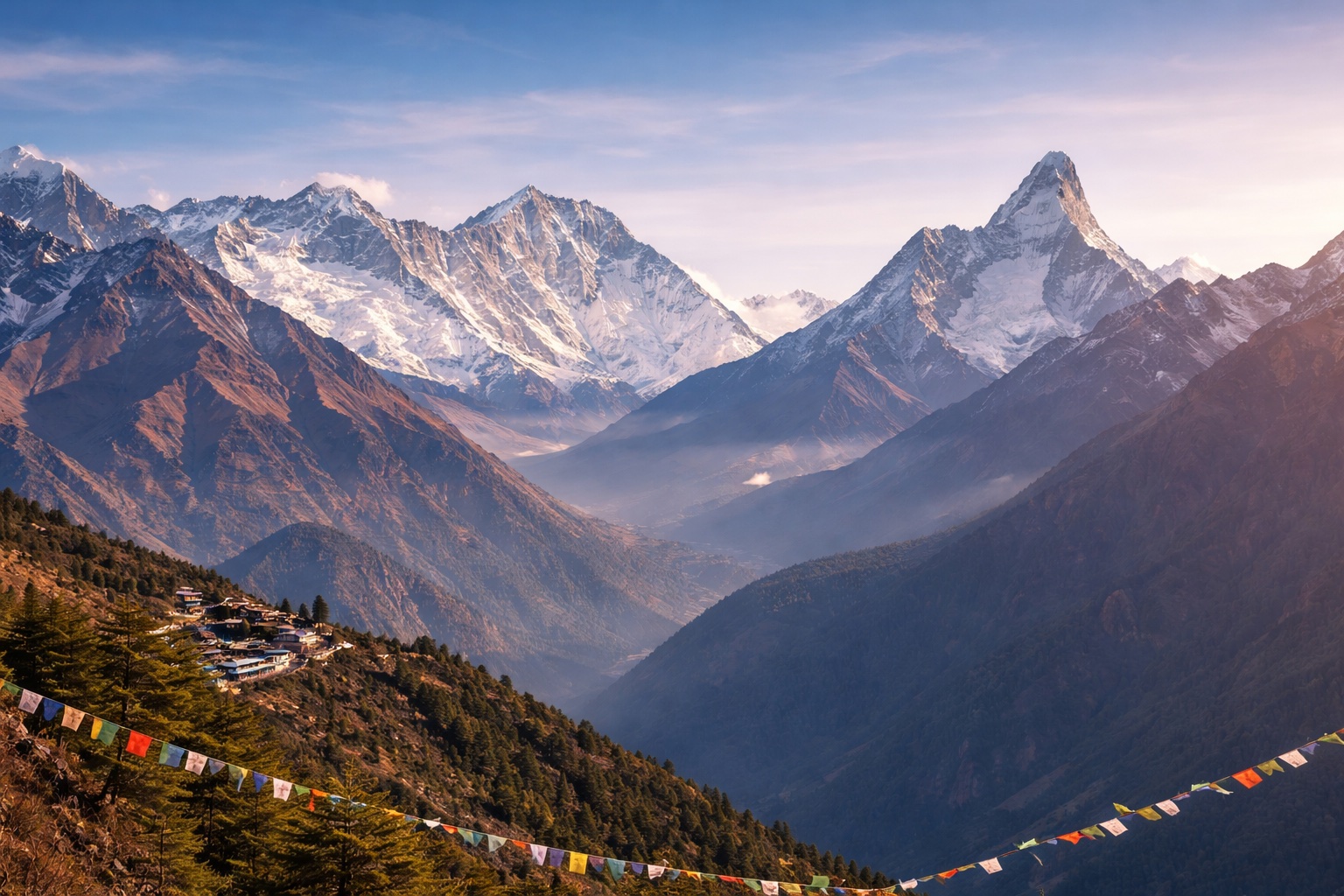
The Kathmandu Valley heritage tour is a 3-day private tour of all seven monument zones of the Kathmandu Valley UNESCO World Heritage Site: Swayambhunath, Kathmandu Durbar Square, Pashupatinath, Boudhanath, Patan, Bhaktapur and Changu Narayan, with a night at Nagarkot for sunrise over the Himalaya.
Led by a licensed English-speaking guide with a private vehicle, the tour brings the valley's temples, living goddess, Newar crafts and festivals to life. It is easy, runs all year and fits perfectly before or after a trek. Hotels, transport and guiding are arranged by our local team in Kathmandu.
The Kathmandu Valley holds one of the densest concentrations of cultural heritage in the world. Its three royal cities, Kathmandu, Patan and Bhaktapur, were rival kingdoms under the Malla kings, who filled them with temples, palaces and squares built by the valley's Newar craftsmen. Together with the great stupas of Swayambhunath and Boudhanath and the temples of Pashupatinath and Changu Narayan, they form a single UNESCO World Heritage Site.
This three-day tour visits all seven monument zones at a relaxed pace, with a licensed guide who explains the history, religion and daily rituals you see, and a night on the valley rim at Nagarkot to watch the sun rise over the Himalaya.
| Trip fact | Details |
|---|---|
| Duration | 3 days, 2 nights |
| Sites | All seven Kathmandu Valley UNESCO monument zones |
| Viewpoint | Nagarkot sunrise over the Himalaya |
| Guide | Licensed English-speaking guide |
| Transport | Private vehicle |
| Accommodation | Hotel in Kathmandu and hotel in Nagarkot |
| Best time | All year; clearest mountain views October–April |
The tour begins at Swayambhunath, climbing the stone stairway past prayer wheels and monkeys to the white stupa with its all-seeing eyes. In the old city, Kathmandu Durbar Square reveals palaces, pagoda temples and the rebuilt Kasthamandap pavilion, and you may glimpse the Kumari at her window. After lunch, Pashupatinath shows Hindu devotion at its most intense, with rituals and cremations on the ghats of the Bagmati. The day ends at Boudhanath, joining pilgrims on the evening kora as butter lamps are lit.
In Patan, the "city of fine arts", you explore Durbar Square, the Patan Museum, one of the best museums of sacred art in South Asia, and the Golden Temple, and meet metalworkers who still cast bronze statues by hand. In the afternoon, Bhaktapur offers car-free squares, the five-tiered Nyatapola Temple, the 55-Window Palace and potters at work in Pottery Square. Try the city's famous juju dhau yoghurt before driving up to Nagarkot for sunset.
Watch the sun rise over a long line of Himalayan peaks from Nagarkot, then descend to Changu Narayan, whose carved sculptures of Vishnu are among the finest in Nepal and whose inscription dates from the 5th century. Return to Kathmandu by early afternoon.
Dress modestly, remove your shoes before entering temples, walk clockwise around stupas and ask before photographing people and rituals. Only Hindus may enter the main temple at Pashupatinath. Your guide will explain customs at each site.
Heritage sites charge entrance fees for foreign visitors, which fund conservation and restoration after the 2015 earthquake. They are not included but can be added. Keep your tickets, as some are checked more than once.
Kathmandu's traffic can be slow, so we start early and plan the route to avoid the busiest times.
Dress modestly, covering shoulders and knees, and wear shoes that are easy to remove at temples. Bring a warm layer for Nagarkot, which is cold at sunrise.
Clear views from Nagarkot are most likely from October to April. In the monsoon, the Himalaya is often hidden by cloud.
Choose add-ons and quantities on the booking form.
More options, quoted on request:
Swayambhunath, Kathmandu Durbar Square, Pashupatinath, Boudhanath, Patan, Bhaktapur and Changu Narayan, the seven UNESCO monument zones, all included in this tour.
A single day covers the main Kathmandu sites. Patan, Bhaktapur and Changu Narayan need at least another day, which is why this tour takes three.
No, but they can be added. Fees fund conservation and post-earthquake restoration.
Yes, with your own guide and vehicle, on your chosen dates.
Yes, from Nagarkot on clear mornings, mostly from October to April.
Modest clothing covering shoulders and knees, and shoes that are easy to remove.
Non-Hindus cannot enter the main temple but can explore the complex and watch rituals from across the river.
Yes. Children enjoy the monkeys, pigeons, potters and festivals, and the pace can be adjusted.
Yes, both can be added, as can the Chandragiri cable car.
All year. October–April has the clearest views; festivals such as Indra Jatra, Dashain and Tihar add colour in autumn.
About 6–8 hours, with breaks for lunch and tea.
It's priced per person, and groups get a discount; the price box has the details. It includes hotels, private vehicle and guide.