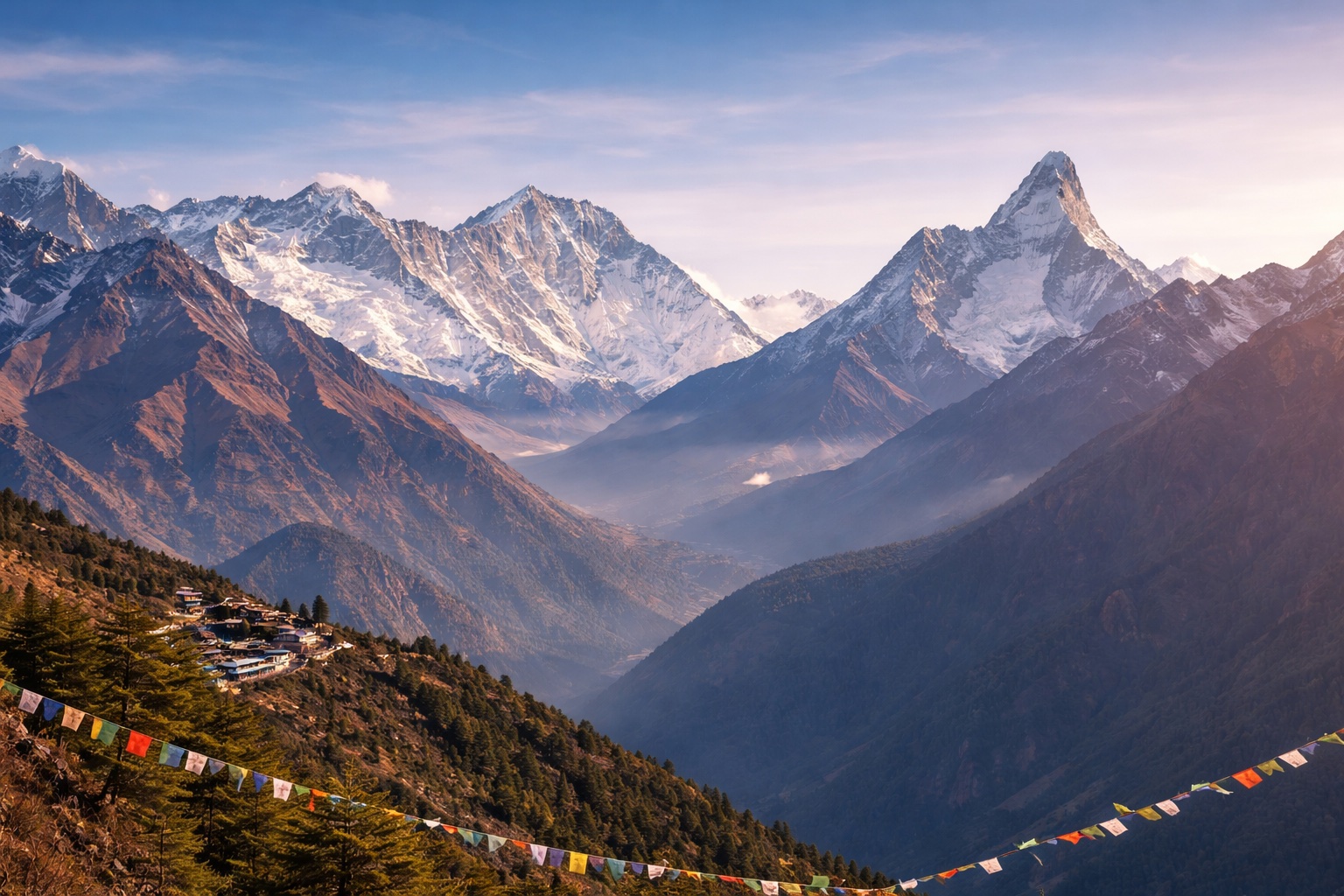
The Makalu Base Camp trek is an 18-day guided trek in eastern Nepal to the foot of Makalu (8,485 m), the fifth-highest mountain in the world. From Tumlingtar the trail climbs through Rai and Sherpa villages and the pristine forests of Makalu Barun National Park, crosses the Shipton La (4,200 m) and follows the wild Barun valley to Makalu Base Camp (4,870 m), facing the vast south face of Makalu with views of Everest, Lhotse and Chamlang.
It is one of the most remote teahouse treks in Nepal, with far fewer trekkers than Everest or Annapurna, and is graded challenging. The best time is April–May and October–November. Our Makalu trek package includes domestic flights, jeep transfers, national park permits, a licensed guide, porters, lodges and all meals on the trek.
Quick answer: the Makalu Base Camp trek takes about 18 days from Kathmandu, reaches a maximum of 4,870 m, costs from US$1,990 per person with a licensed guide, and is best done in spring (April–May) or autumn (October–November). It is a challenging, remote trek suitable for fit trekkers with previous experience of multi-day hiking.
Makalu is the striking pyramid you see to the east from Everest Base Camp. Its base camp lies in the upper Barun valley, a protected wilderness of rhododendron and fir forest, alpine meadows, waterfalls and glaciers that is home to red pandas, snow leopards and more than 400 species of birds. Few trails in Nepal feel as untouched.
| Trip fact | Details |
|---|---|
| Duration | 18 days from Kathmandu (14 days of trekking) |
| Maximum altitude | Makalu Base Camp, 4,870 m / 15,978 ft |
| Highest pass | Shipton La (Keke La), about 4,200 m |
| Grade | Challenging |
| Start and finish | Tumlingtar (flight from Kathmandu), jeep to Num |
| Accommodation | Basic teahouse lodges |
| Permits | Makalu Barun National Park permit and local area fee |
| Best time | April–May and October–November |
| Cost | From US$1,990 per person |
The trek is challenging. The route climbs from about 500 m at the Arun river to 4,870 m, with steep ascents and descents, long days of 6–7 hours and a high crossing of the Shipton La, which can be snowy in spring. Lodges are simple and sometimes far apart. You do not need climbing skills, but previous trekking experience and good fitness are strongly recommended.
| Cost item | Guide price |
|---|---|
| Full guided package (this trip) | From US$1,990 per person |
| Makalu Barun National Park permit | About NPR 3,000 per person (included) |
| Flights Kathmandu – Tumlingtar – Kathmandu | Included |
| Food and drinks on the trek | Meals included; drinks and snacks about US$10–15 a day |
| Tips for guide and porters | About 10–15% of the trip cost |
October–November offers the clearest views and stable weather. April–May brings rhododendron blossom in the Barun valley, though the Shipton La may still hold snow. Winter closes many lodges, and the monsoon makes trails muddy with leeches.
Everest Base Camp has better lodges, flights to Lukla and a famous destination; Makalu Base Camp is wilder, quieter and longer, with more varied forest and no crowds. Trekkers who have done EBC often choose Makalu as their next adventure.
This is a long and demanding trek with steep climbs and descents of over 1,000 m in a day. You should be fit, comfortable walking 6–7 hours a day for two weeks and ideally have previous trekking experience. Train for three months with long hill walks, stair climbing and cardio.
This trek reaches 4,870 m at Makalu Base Camp, with an optional hike to about 5,200 m. Symptoms of acute mountain sickness include headache, nausea, dizziness, loss of appetite and poor sleep. Walk slowly, drink 3–4 litres of water a day, avoid alcohol and tell your guide about any symptoms. If symptoms get worse, descending is the most effective treatment. Talk to your doctor before the trip about whether altitude medication is right for you.
The lower valleys are warm and humid; the Barun valley is cold at night, often −10°C in late autumn. Snow on the Shipton La is common in spring and possible from late November.
Tumlingtar flights have a baggage limit of about 15 kg plus 5 kg hand luggage. Delays are less frequent than at Lukla, but a spare day is recommended.
The Makalu Barun National Park permit and local area fees are included.
Take out cash in Kathmandu or Pokhara before you set off: there are very few ATMs on the trail, and the ones that exist often don't work. Lodges charge a little for hot showers, charging and Wi-Fi, so a power bank saves money.
Bring a refillable bottle and either purification tablets or a filter. Lodges also sell boiled water, which is cheaper and better for the trail than bottled water.
Travel insurance is compulsory. It must cover trekking to 5,200 m, medical treatment and emergency helicopter evacuation. Please send us your policy details before departure.
Most visitors get a tourist visa on arrival at Kathmandu airport, or apply online before they fly. Your passport needs six months' validity, and bring a few passport photos for trekking permits.
Choose add-ons and quantities on the booking form.
More trip options, quoted on request:
The Makalu Base Camp trek takes about 18 days from Kathmandu, including 14 days of walking from Num. Shorter versions of 15–16 days are possible but leave less time for acclimatisation.
Makalu Base Camp is at about 4,870 m (15,978 ft). The highest pass on the route, the Shipton La, is about 4,200 m.
It is challenging: long days, steep ascents and descents, high passes and basic lodges. Good fitness and previous trekking experience are recommended.
Our guided Makalu trek costs from US$1,990 per person, including flights, jeeps, permits, guide, porters, lodges and meals, with group discounts in the price box.
You need the Makalu Barun National Park permit and a local area fee. Both are included in our package.
October–November for clear skies and April–May for rhododendrons. Winter and the monsoon are not recommended.
Yes. Basic teahouse lodges now operate all the way to base camp, so camping is no longer necessary.
Yes. From the ridge above base camp you can see Everest and Lhotse to the west, along with the Barun Glacier.
No. It is one of the quietest teahouse treks in Nepal, with only a few thousand visitors a year.
Generally yes. The altitude is lower, but the trek is longer, steeper and more remote, with simpler lodges.
Fly from Kathmandu to Tumlingtar (about 45 minutes) and drive by jeep to Num.
Yes. Nepal requires foreign trekkers in national parks to walk with a licensed guide, and the remote trail makes a guide essential.
Red pandas, snow leopards, Himalayan black bears, musk deer and over 400 bird species, though large mammals are rarely seen.
Experienced trekkers can cross the Sherpani Col and Amphu Labtsa to the Everest region, a camping expedition requiring mountaineering skills.