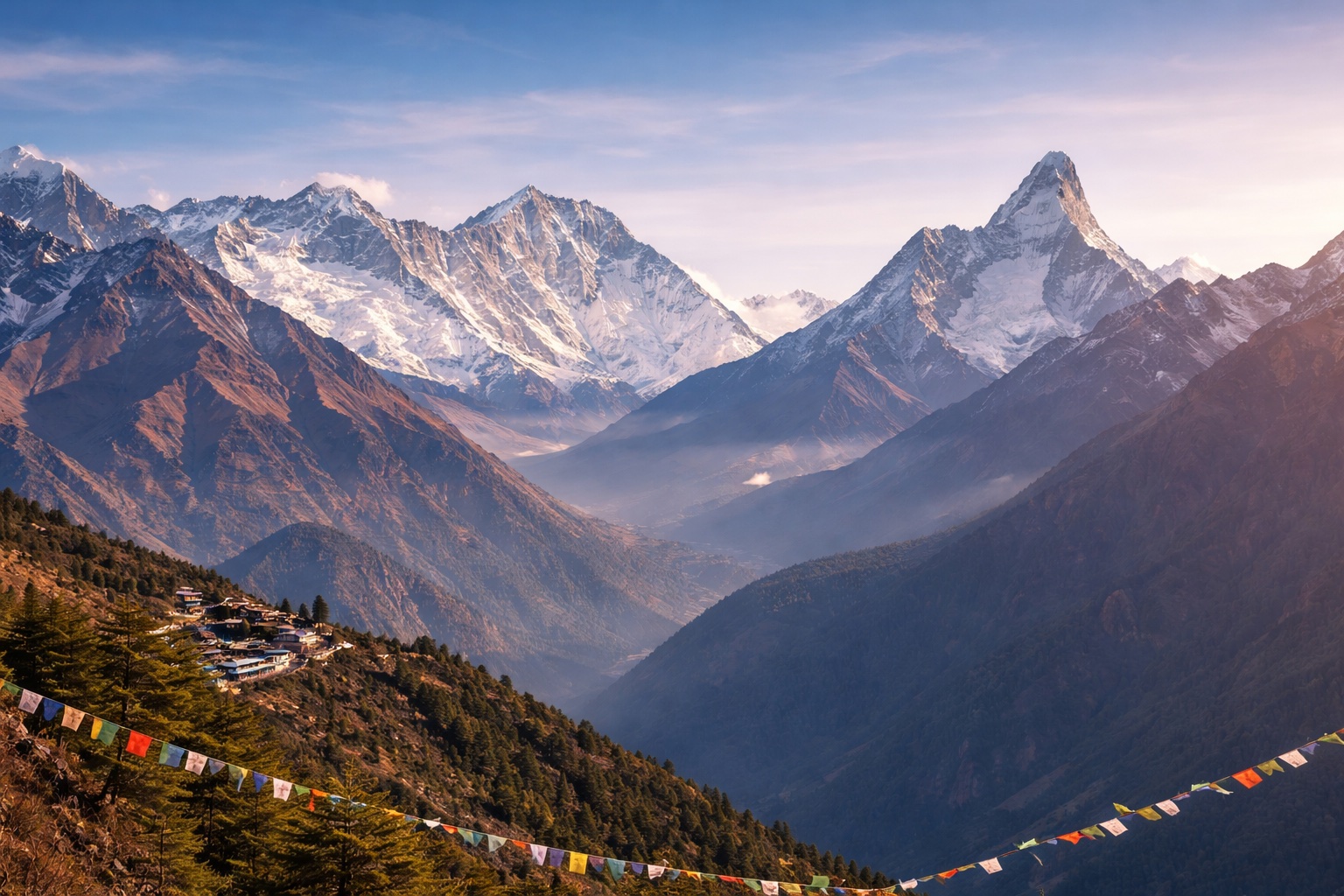
The Nar Phu Valley trek is a 13-day restricted area trek into two hidden valleys north of the Annapurna Circuit. Deep gorges lead to the medieval Tibetan villages of Phu (4,080 m) and Nar (4,110 m), with stone houses, chortens, yak herders and the ancient Tashi Lhakhang Gompa. You then cross the Kang La Pass (5,320 m) with a huge view of Annapurna II and descend to Ngawal and Manang.
Few trekkers make it here, as the valleys need a special restricted area permit and at least two trekkers with a licensed guide. The trek is challenging and best from March–May and September–November. Our package includes the special permit, ACAP, transport, a guide, porters and teahouse and homestay accommodation.
The valleys of Nar and Phu opened to foreign trekkers only in 2003. They are part of the Manang district but feel like a separate world: a narrow canyon above Koto leads through a hidden gateway into high pastures and villages that have changed little in centuries. The people are of Tibetan origin, live by herding yaks and trading, and follow Tibetan Buddhism.
After exploring Phu and Nar, the trek crosses the Kang La Pass into the upper Manang valley, where you can continue on the Annapurna Circuit over Thorong La or return to Kathmandu by jeep. It is one of the best off-the-beaten-path treks in the Annapurna region.
| Trip fact | Details |
|---|---|
| Duration | 13 days from Kathmandu (10 days of trekking) |
| Highest point | Kang La Pass, 5,320 m |
| Grade | Challenging |
| Permits | Nar Phu restricted area permit and ACAP |
| Minimum group | 2 trekkers with a licensed guide |
| Accommodation | Simple teahouses and homestays |
| Best time | March–May and September–November |
The Nar Phu area is a restricted area. Foreigners need a special permit issued through a registered trekking agency, must trek in a group of at least two and must be accompanied by a licensed guide. We arrange all of this; we need your passport copy and visa details in advance.
The trek is challenging. Days are long, lodges are basic, and the Kang La crossing is a steep 8–9 hour day, sometimes snowy. Previous trekking experience at altitude is recommended.
You should be fit and comfortable walking 6–8 hours a day on steep, rough trails, with previous trekking experience at altitude recommended. Train for two to three months with long hill walks and cardiovascular exercise.
The highest point is 5,320 m on the Kang La Pass, with several nights above 4,000 m in Phu and Nar. Most people feel the altitude a little: a mild headache, poor sleep, less appetite. Go slowly, drink 3–4 litres a day, skip the beer until you are back down, and tell your guide straight away if you feel worse. Going down is the cure that always works. Ask your doctor before you travel whether altitude medication makes sense for you.
Nar and Phu lie in a rain shadow and are dry, but very cold at night. The Kang La can be snowy in late autumn and spring.
The Nar Phu restricted area permit and ACAP are included. The permit requires a minimum of two trekkers and a licensed guide.
Carry Nepali rupees for drinks, snacks, showers and charging, and get them in the city; mountain ATMs are rare and unreliable. Wi-Fi is available in many lodges for a small fee. A power bank is worth packing.
Buy boiled or filtered water at lodges or use purification tablets or a filter with a refillable bottle, instead of buying plastic bottles.
You need travel insurance that covers trekking to 5,400 m, medical care and helicopter rescue. We ask for your policy details before you arrive.
You can usually get a Nepal visa on arrival at the airport or apply online in advance. Check that your passport is valid for at least six months, and pack a few passport photos for permits.
Choose add-ons and quantities on the booking form.
More trip options, quoted on request:
In the Manang district, north of the Annapurna Circuit, entered from Koto.
It borders Tibet and was closed until 2003. A special permit protects its culture and environment.
No. The permit requires at least two trekkers and a licensed guide.
Challenging, with long days, basic lodges and the 5,320 m Kang La Pass.
About 5,320 m.
March–May and September–November.
Simple teahouses and homestays with shared facilities.
Yes, from Manang you can continue over Thorong La to Muktinath.
Signal is limited in the valleys; there is some coverage in Koto and Manang.
13 days from Kathmandu.
The permit fee is charged per week and varies by season; it is included in the price.
It's priced per person, and groups get a discount; the price box has the details.